
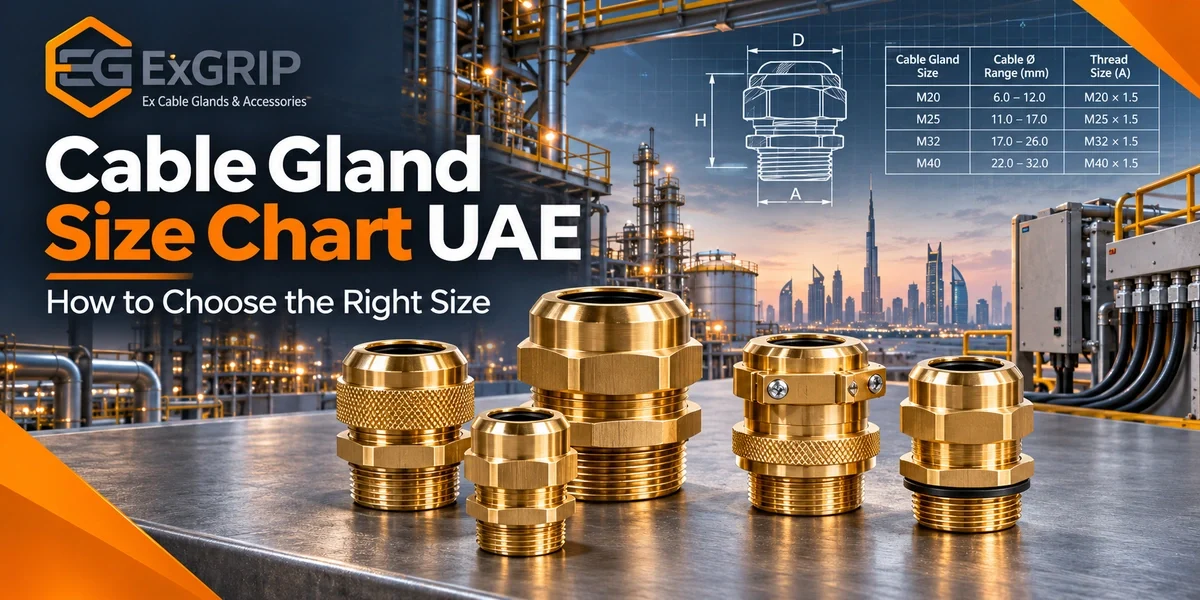
A cable gland size chart helps you match a gland to a cable before you order. On UAE projects, a wrong size often means a delayed shipment to Dubai, Abu Dhabi or Sharjah. The gland may not seal, the cable may not fit, or the thread may not match the enclosure.
This guide explains how to read the cable gland selection chart for armoured cable. It also covers threads, hazardous areas and a six step method you can use on your next order.
Table of contents
Jump to a sectionWhat decides cable gland size
Gland size comes from the cable, not from the conductor size alone. Three measurements matter.
Outer sheath diameter
This is the width of the finished cable. The seal must close tightly around it. Our guide on how to measure cable outer diameter shows the method.
Bedding diameter under the armour
Steel wire armoured (SWA) cable has a layer called bedding under the armour. A double compression gland seals on the bedding first and on the outer sheath second. For this reason, armoured cable needs two measurements instead of one.
Thread on the equipment
The gland screws into a motor box, panel or junction box. Check the thread type and size on that entry before you pick a gland. If they differ, you need a reducer or adapter.
Cable gland size chart for UAE projects
The table below comes from the ExGrip selection chart for armoured cable. Find your cable size and core count, then read the bedding range and the gland sizes. Download the cable gland size chart PDF for a copy. You can also see the armoured and double compression size chart and the cable gland selection charts.
Which series suits which cable
Single compression
A2F, SCU, SCUB (barrier)
Double compression
DCU, DCUB (barrier)
Single compression
SCA, SCAB (barrier)
Double compression
E1FW, DCA, DCAB (barrier)
View original series comparison table
| Cable type | Compression | Series |
|---|---|---|
| Unarmoured | Single | A2F, SCU, SCUB (barrier) |
| Unarmoured | Double | DCU, DCUB (barrier) |
| Armoured (SWA) | Single | SCA, SCAB (barrier) |
| Armoured (SWA) | Double | E1FW, DCA, DCAB (barrier) |
Armoured cable size chart (SWA bedding and gland size)
Find the correct cable gland size
Search by cable size and filter by cores. All original chart values are retained.
| Cable size (sq mm) | Cores | Bedding min (mm) | Bedding max (mm) | E1FW gland size | DCA, DCAB, SCA, SCAB gland size |
|---|---|---|---|---|---|
| 1.0 | 2 | 8.0 | 9.5 | E1FW#16;20S | 16;20;20l |
| 1.0 | 3 | 9.1 | 9.6 | E1FW#16;20S | 20;20l |
| 1.0 | 4 | 9.5 | 10.4 | E1FW#20S | 20;20l |
| 1.0 | 7 | 10.2 | 10.5 | E1FW#20S | 20;20l;25 |
| 1.0 | 12 | 13.0 | 13.5 | E1FW#20L | 20l;25 |
| 1.0 | 19 | 15.6 | 16.0 | E1FW#25S;25L | 25;32 |
| 1.0 | 27 | 20.0 | 20.5 | E1FW#32 | 32;40 |
| 1.0 | 37 | 22.0 | 23.0 | E1FW#32 | 32;40 |
| 1.5 | 2 | 7.3 | 9.1 | E1FW#16;20S | 16;20;20l |
| 1.5 | 3 | 7.8 | 9.9 | E1FW#16;20S | 16;20;20l |
| 1.5 | 4 | 8.5 | 10.9 | E1FW#20S | 20;20l |
| 1.5 | 5 | 9.7 | 12.3 | E1FW#20L | 20l;25 |
| 1.5 | 7 | 10.0 | 14.2 | E1FW#25S;25L | 20;20l;25 |
| 1.5 | 8 | 12.6 | 15.2 | E1FW#25S;25L | 20l;25;32 |
| 1.5 | 10 | 14.8 | 15.4 | E1FW#25S;25L | 25;32 |
| 1.5 | 12 | 13.7 | 15.8 | E1FW#25S;25L | 20l;25;32 |
| 1.5 | 14 | 16.2 | 17.6 | E1FW#25S;25L | 25;32 |
| 1.5 | 19 | 16.2 | 20.5 | E1FW#32 | 25;32;40 |
| 1.5 | 24 | 21.7 | 22.4 | E1FW#32 | 32;40;50 |
| 1.5 | 27 | 20.0 | 22.9 | E1FW#32 | 32;40;50 |
| 1.5 | 30 | 23.7 | 23.9 | E1FW#32 | 40;50 |
| 1.5 | 37 | 22.3 | 26.7 | E1FW#40 | 32;40;50 |
| 2.5 | 2 | 8.5 | 9.0 | E1FW#16;20S | 20;20l;25 |
| 2.5 | 3 | 9.2 | 10.0 | E1FW#20S | 20;20l;25 |
| 2.5 | 4 | 9.9 | 10.6 | E1FW#20S | 20;20l;25 |
| 2.5 | 5 | 11.5 | 13.0 | E1FW#20L | 20;20l;25 |
| 2.5 | 7 | 11.0 | 13.0 | E1FW#20L | 20;20l;25 |
| 2.5 | 8 | 12.0 | 13.0 | E1FW#20L | 20;20l;25 |
| 2.5 | 10 | 16.0 | 16.6 | E1FW#25S;25L | 25;32 |
| 2.5 | 12 | 16.3 | 18.1 | E1FW#25S;25L | 25;32 |
| 2.5 | 14 | 18.0 | 19.0 | E1FW#25S;25L | 32 |
| 2.5 | 19 | 19.9 | 21.4 | E1FW#32 | 32;40;50 |
| 2.5 | 24 | 24.7 | 25.1 | E1FW#32 | 40;50 |
| 2.5 | 27 | 24.0 | 25.7 | E1FW#32 | 40;50 |
| 2.5 | 30 | 26.0 | 26.6 | E1FW#40 | 40;50 |
| 2.5 | 37 | 26.9 | 29.4 | E1FW#40 | 40;50 |
| 4 | 2 | 9.4 | 11.0 | E1FW#20S | 20;20l;25 |
| 4 | 3 | 10.0 | 11.5 | E1FW#20S | 20;20l;25 |
| 4 | 4 | 11.0 | 12.5 | E1FW#20L | 20;20l;25 |
| 4 | 5 | 13.0 | 14.5 | E1FW#25S;25L | 20l;25;32 |
| 4 | 7 | 12.0 | 15.0 | E1FW#25S;25L | 20;20l;25;32 |
| 4 | 8 | 17.3 | 18.1 | E1FW#25S;25L | 32 |
| 4 | 10 | 19.7 | 20.2 | E1FW#32 | 32;40 |
| 4 | 12 | 20.4 | 21.0 | E1FW#32 | 32;40;50 |
| 4 | 14 | 22.0 | 22.8 | E1FW#32 | 32;40;50 |
| 4 | 19 | 24.9 | 25.0 | E1FW#32 | 40;50 |
| 6 | 2 | 10.5 | 12.0 | E1FW#20S | 20;20l;25 |
| 6 | 3 | 11.2 | 13.0 | E1FW#20L | 20;20l;25 |
| 6 | 4 | 12.3 | 14.0 | E1FW#25S;25L | 20l;25;32 |
| 6 | 5 | 14.5 | 16.0 | E1FW#25S;25L | 25;32 |
| 6 | 7 | 13.5 | 17.5 | E1FW#25S;25L | 20l;25;32 |
| 10 | 2 | 12.3 | 13.5 | E1FW#20L | 20l;25 |
| 10 | 3 | 13.1 | 20.7 | E1FW#32 | 20l;25;32 |
| 10 | 4 | 14.5 | 16.4 | E1FW#25S;25L | 25;32 |
| 10 | 5 | 17.2 | 19.0 | E1FW#25S;25L | 32 |
| 10 | 7 | 15.0 | 20.0 | E1FW#32 | 25;32;40;50 |
| 16 | 2 | 14.3 | 15.5 | E1FW#25S;25L | 25;32 |
| 16 | 3 | 15.3 | 22.8 | E1FW#32 | 25;32;40;50 |
| 16 | 4 | 17.0 | 19.8 | E1FW#25S;25L | 25;32 |
| 16 | 5 | 20.0 | 21.5 | E1FW#32 | 32;40;50 |
| 16 | 7 | 18.1 | 18.5 | E1FW#25S;25L | 32 |
| 25 | 2 | 14.0 | 14.7 | E1FW#25S;25L | 20l;25;32 |
| 25 | 3 | 17.7 | 24.9 | E1FW#32 | 32;40;50 |
| 25 | 4 | 20.6 | 21.5 | E1FW#32 | 32;40;50 |
| 25 | 5 | 24.7 | 26.5 | E1FW#40 | 40;50 |
| 25 | 7 | 21.0 | 21.5 | E1FW#32 | 32;40;50 |
| 35 | 2 | 16.0 | 16.8 | E1FW#25S;25L | 25;32 |
| 35 | 3 | 19.3 | 21.3 | E1FW#32 | 32;40;50 |
| 35 | 4 | 21.9 | 24.0 | E1FW#32 | 32;40;50 |
| 35 | 5 | 27.8 | 29.5 | E1FW#40 | 40;50 |
| 50 | 2 | 18.0 | 19.0 | E1FW#25S;25L | 32 |
| 50 | 3 | 21.7 | 24.2 | E1FW#32 | 32;40;50 |
| 50 | 4 | 25.0 | 28.1 | E1FW#40 | 40;50 |
| 50 | 5 | 31.8 | 32.4 | E1FW#50S | 50 |
| 70 | 2 | 21.0 | 22.0 | E1FW#32 | 32;40;50 |
| 70 | 3 | 24.7 | 27.0 | E1FW#40 | 40;50 |
| 70 | 4 | 29.2 | 31.5 | E1FW#40 | 50 |
| 95 | 2 | 24.7 | 25.1 | E1FW#32 | 40;50 |
| 95 | 3 | 28.6 | 31.1 | E1FW#40 | 40;50 |
| 95 | 4 | 33.3 | 36.0 | E1FW#50S | 50;63 |
| 95 | 5 | 42.0 | 43.0 | E1FW#50L | 63 |
| 120 | 2 | 27.2 | 27.9 | E1FW#40 | 40;50 |
| 120 | 3 | 31.0 | 33.5 | E1FW#50S | 50 |
| 120 | 4 | 35.4 | 40.0 | E1FW#50L | 63 |
| 150 | 2 | 29.5 | 30.9 | E1FW#40 | 50 |
| 150 | 3 | 33.9 | 37.0 | E1FW#50S;50L | 50;63 |
| 150 | 4 | 39.3 | 44.0 | E1FW#50L;63S | 63 |
| 185 | 2 | 37.0 | 37.8 | E1FW#50L | 63 |
| 185 | 3 | 37.8 | 42.0 | E1FW#50L;63S | 63 |
| 185 | 4 | 44.5 | 49.0 | E1FW#63S | 63;75 |
| 240 | 2 | 41.8 | 42.6 | E1FW#50L;63S | 63 |
| 240 | 3 | 42.6 | 47.0 | E1FW#63S | 63;75 |
| 240 | 4 | 50.0 | 55.0 | E1FW#63L | 75 |
| 300 | 2 | 49.0 | 49.8 | E1FW#63S | 75 |
| 300 | 3 | 49.8 | 52.0 | E1FW#63L | 75 |
| 300 | 4 | 58.0 | 61.0 | E1FW#75S | 75l;85 |
| 400 | 2 | 61.0 | 63.0 | E1FW#75L | 75l;85 |
| 400 | 3 | 62.5 | 64.0 | E1FW#75L | 75l;85;90 |
| 400 | 4 | 64.0 | 68.0 | E1FW#90 | 75l;85;90 |
The sizes are a guide. A gland may need to be one size up. Measure the real cable and compare it with the bedding min and max values.
Example: 4 core 300 sq mm armoured cable
Find 300 in the first column and 4 in the second. The chart shows a bedding range of 58.0 to 61.0 mm. The E1FW gland size is 75S. In the DCA, DCAB, SCA and SCAB series, the sizes are 75l or 85. The chart has no 3.5 core rows, so for a 3.5 core cable, measure the real bedding first. For more large sizes, see the SWA armoured cable gland size guide.
How to choose a gland in six steps
Use these steps in order on every new cable. Steps 1 and 2 need the most care, because every later choice depends on the measurements.
Step 1: get the cable data sheet
Write down the cable standard, armour type, core count and conductor size. Many published gland charts assume cable made to BS 5467, so a cable built to another standard may measure differently.
Step 2: measure the cable
Use calipers. Measure the outer sheath in two directions, because cables are not always round. Strip a short length of armoured cable and measure the bedding.
Step 3: pick the gland series
Choose single or double compression, armoured or unarmoured, and standard or barrier type. The series table above helps. For more detail, read about cable gland types.
Step 4: match the sizes on the chart
Find the row for your cable size and core count. The bedding must sit inside the min and max range. If a value is near the edge, check the next size up. A gland size calculator gives a second check.
Step 5: match the thread
Confirm thread type, size and pitch against the enclosure. When they differ, use a reducer or adapter from the same range.
Step 6: check the rating and certificate
Confirm the IP rating and material. In a hazardous area, also confirm the Ex marking and the zone.
Thread types on UAE sites
Metric thread is the usual choice on new equipment. PG thread turns up on older panels and some imported gear. NPT appears on equipment built to North American practice, often in oil and gas. Our post on metric, NPT and PG cable gland threads compares them.
Do not force a thread that does not match. Use an adapter, and check that the adapter is allowed in the area class.
Glands for hazardous areas
In a classified area, the gland must suit the zone and the equipment as well as the cable.
- A gland on a flameproof (Ex d) enclosure must be suited to Ex d. A gland on an increased safety (Ex e) box must be suited to Ex e.
- IEC 60079-14 covers the design, selection and erection of electrical installations in explosive atmospheres, including cable entries.
- The UAE runs the ECAS-Ex scheme under the Ministry of Industry and Advanced Technology. It lines up with IECEx.
- Oil and gas clients and consultants often add their own approval lists, so read your project specification first.
ExGrip explosion-proof glands carry ATEX and IECEx certification. See ATEX and IECEx certified cable glands explained and the Zone 1 and Zone 2 selection guide. Ask for the certificate and confirm what your client accepts.
Materials and IP ratings for UAE conditions
Outdoor glands in the UAE face strong sun and high heat. Sites near the coast also see salt air and fine dust.
The cable gland parts guide shows how the seal, cone and clamp work together. The BS 6121 code of practice from BSI gives general advice on selecting, installing and inspecting glands.
Sizing mistakes and fixes
Check this list before you place an order.
View original mistake / result / fix table
| Mistake | Result | Fix |
|---|---|---|
| Sizing from conductor size only | Cable does not fit or seal | Measure outer diameter and bedding |
| Using another brand's chart | Ranges differ, so the fit is off | Use the chart of the brand you buy |
| Skipping the bedding on SWA cable | Inner seal fails | Check the bedding range |
| Wrong thread | Gland will not screw in | Check type, size and pitch |
| Standard gland in a hazardous area | Safety and approval risk | Use a certified Ex gland for the zone |
| Trusting chart values for a non-standard cable | Real cable differs from the chart | Measure before ordering |
Order cable glands for the UAE and GCC
ExGrip manufactures cable glands in Jamnagar, India, and ships to all GCC countries: the UAE, Saudi Arabia, Qatar, Kuwait, Oman and Bahrain. For a correct quote, send the following details.
Our team checks the size against the chart and replies with the matching gland.
Frequently asked questions
Short answers to common questions about gland sizing and ordering for UAE sites.
How do I choose a cable gland size for armoured cable?
Measure the outer sheath diameter and the inner bedding diameter under the armour. Find your cable size and cores on the chart, and check that the bedding sits inside the min and max range. Then match the thread to the equipment entry.
Is the cable gland size chart the same for every brand?
No. Gland size names look alike, but the cable ranges differ between makers. Use the chart of the brand you buy.
What gland size fits a 4 core 300 sq mm armoured cable?
In the ExGrip chart, a 4 core 300 sq mm cable has a bedding range of 58.0 to 61.0 mm. The E1FW size is 75S, and the DCA series sizes are 75l or 85. Measure your cable to confirm.
When do I need an explosion-proof cable gland?
Use one when the cable enters equipment in a classified hazardous area. The gland needs the Ex certificate that fits the zone and the equipment. Check your project specification.
Which thread types do UAE sites use?
Metric is the most common on new equipment. PG and NPT also appear, mostly on older or imported equipment.
What is the difference between single and double compression glands?
A single compression gland seals on the outer sheath and grips the armour in one step. A double compression gland seals the inner bedding and the outer sheath separately.
Where can I get the cable gland size chart PDF?
Use the ExGrip selection chart PDF. Confirm the size against your actual cable.
Does ExGrip ship cable glands to the UAE and the rest of the GCC?
Yes. ExGrip ships to all GCC countries: the UAE, Saudi Arabia, Qatar, Kuwait, Oman and Bahrain.
Need help selecting your gland?
Not sure which gland fits your cable? Request a quote with your cable size and thread type, and we will confirm the size.