
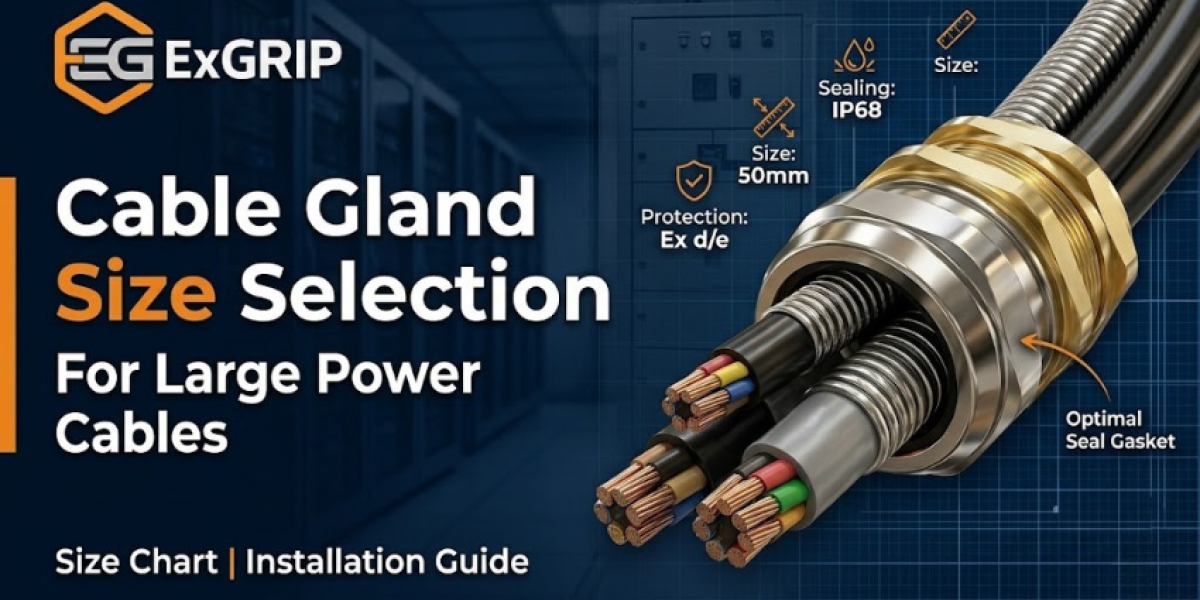
Selecting the correct cable gland size is one of the most critical steps in ensuring safe and reliable electrical installations especially when dealing with large power cables. Whether you’re working in industrial plants, data centers, or hazardous environments, using the right cable gland size chart helps prevent sealing failures, electrical faults, and costly downtime.
With rising demand for high-capacity power cable installations, engineers and technicians often search for accurate references like gland size chart, cable size and gland size, and even armoured cable gland size chart PDF to make the right decision. However, incorrect sizing remains one of the most common causes of installation failure.
This guide will help you understand how to select the correct gland size, avoid common mistakes, and ensure long-term performance.
What is a Cable Gland Size Chart?
A cable gland size chart is a reference table used to match cable diameter with the appropriate gland size.
It typically includes:
- Cable outer diameter (OD)
- Inner sheath diameter
- Suitable gland type
- Thread size
Using an accurate gland size chart ensures:
- Proper sealing (IP protection)
- Mechanical stability
- Safe grounding for armoured cables
How to Select the Right Cable Gland Size
Step 1: Measure Cable Diameter
Start by accurately measuring the cable dimensions.
- Measure the outer diameter (OD) of the cable using a vernier caliper or measuring tool
- For armoured cables, also measure the inner bedding diameter after removing the outer sheath
Step 2: Refer to Cable Gland Size Chart
Once you have the measurements, match them with a standard cable gland size chart.
- Use a manufacturer-approved Cable Glade Size Chart
- Ensure your cable diameter falls within the gland’s specified clamping range
Step 3: Identify Cable Type
The type of cable determines the type of gland you should use.
- Armoured cables → Require double compression glands for proper grip and earthing
- Unarmoured cables → Use single compression glands for basic sealing
Step 4: Consider the Installation Environment
Environmental conditions play a critical role in gland selection.
- Outdoor or wet areas → Use IP68 waterproof glands to prevent water and dust ingress
- Hazardous or explosive zones → Use flameproof (Ex d) glands for safety compliance
Why Cable Gland Size Matters for Large Power Cables
Large power cables carry high voltage and current, so the cable gland must provide proper sealing, mechanical support, and electrical continuity. Incorrect cable gland size selection can directly impact safety, performance, and lifespan of the entire installation.
| Issue | What Happens | Practical Impact | Where It Becomes Critical |
|---|---|---|---|
| Loose Sealing (Oversized Gland) | Gland cannot tightly grip the cable outer sheath, leaving gaps | Entry of water, dust, and contaminants leading to short circuits and corrosion | Outdoor installations, marine environments, high humidity areas |
| Over-Tight Fit (Undersized Gland) | Excessive force compresses cable sheath and insulation | Damage to insulation, reduced cable life, overheating risk | High load power cable systems, continuous operation plants |
| Poor Earthing (Armoured Cables) | Armour wires are not properly secured inside the gland | Loss of electrical continuity, unsafe fault current path | Industrial plants, hazardous areas, high voltage systems |
| Weak Mechanical Grip | Cable is not firmly held by the gland | Cable slippage, strain on terminals, connection failure | Areas with vibration, heavy machinery, cable movement |
| Seal Failure Over Time | Improper fit causes gradual degradation of sealing components | Frequent maintenance, leakage, reduced reliability | Long-term installations, remote industrial sites |
| Reduced Installation Lifespan | Continuous stress on cable and gland connection | Early failure and replacement costs increase | Large infrastructure and power distribution systems |
Benefits of Correct Cable Gland Size Selection
| Parameter | Result |
|---|---|
| Proper Sealing | Prevents ingress of dust, water, and chemicals |
| Mechanical Strength | Ensures strong cable grip and strain relief |
| Electrical Safety | Maintains proper earthing and fault protection |
| Durability | Extends life of cable and installation |
| Compliance | Meets IEC, ATEX, and industrial safety standards |
Types of Cable Glands for Large Power Cables
Choosing the right type of cable gland depends on three main factors: cable type, environment, and safety requirements. Below is a simple, structured breakdown that helps users quickly understand which gland to use and why.
Best suited for: Armoured power cables (SWA, AWA, XLPE)
How it works:
These glands provide sealing at two points the outer sheath and inner sheath, along with proper clamping of the armour.
Why it is used for large power cables:
- Ensures strong mechanical grip for heavy cables
- Provides reliable earthing through armour clamping
- Performs well under vibration and load conditions
Where to use:
- Industrial plants
- Power distribution systems
- Outdoor and high-vibration environments
Important note:
Using this gland on unarmoured cables is unnecessary and increases cost without added benefit.
Best suited for: Unarmoured cables (control, instrumentation, light power cables)
How it works:
Seals only at the outer sheath of the cable.
Why it is used:
- Simple and cost-effective solution
- Easy to install
- Suitable for low-stress applications
Where to use:
- Indoor panels
- Cable trays
- Controlled environments
Limitation:
Not suitable for armoured cables or areas with vibration, as it does not provide armour support.
Best suited for: Hazardous and explosive environments
How it works:
Designed to contain and prevent flame propagation, ensuring that any internal explosion does not spread outside.
Why it is critical:
- Meets strict safety standards (ATEX, IECEx)
- Prevents ignition in flammable atmospheres
- Ensures compliance in regulated industries
Where to use:
- Oil & gas plants
- Chemical industries
- Refineries and hazardous zones
Important note:
Not required for general applications, as it adds cost and complexity.
Best suited for: Outdoor and wet environments
How it works:
Provides high-level sealing (IP68 rating) to block water, dust, and moisture.
Why it is important:
- Protects against environmental damage
- Prevents corrosion and internal faults
- Ensures long-term reliability
Where to use:
- Outdoor installations
- Marine environments
- Areas exposed to rain, dust, or washdowns
Limitation:
Over-specifying for indoor use may not be cost-efficient.
Best suited for: Critical hazardous areas requiring maximum protection
How it works:
Uses a compound sealing system that seals each individual cable core.
Why it is used:
- Prevents gas migration through cable cores
- Offers highest level of explosion protection
Where to use:
- Zone 1 and Zone 2 hazardous areas
- High-risk industrial environments
Limitation:
Installation is more complex and requires skilled handling.
Conclusion & Call-to-Action
Choosing the correct cable gland size is not just about fitting it’s about ensuring safety, performance, and long-term reliability. By using an accurate cable gland size chart, understanding your power cable requirements, and avoiding common mistakes, you can significantly reduce installation failures.
Whether you’re referencing a gland size chart, comparing cable size and gland size, or downloading an armoured cable gland size chart PDF, always rely on verified data and certified products.
📩 Talk to our technical team today at Exgrip.com
📞 Or call us directly for quick assistance!
Contact Us:
📞 Phone: +91 9537118899
🌐 Website: www.exgrip.com
📩 Request a Quote: Contact Page
FAQs
How do I select the correct cable gland size?
Measure the cable outer diameter and match it with a verified cable gland size chart provided by the manufacturer.
What happens if I use the wrong gland size?
It can cause sealing failure, cable damage, and increase the risk of electrical hazards.
Can I use one gland for all cable types?
No, armoured and unarmoured cables require different gland types for proper sealing and grounding.
Where can I find an armoured cable gland size chart PDF?
Most manufacturers like Exgrip provide downloadable armoured cable gland size chart PDF for accurate selection.
Why is gland size important for power cables?
Large power cable installations require precise gland sizing to ensure safety, durability, and compliance.
Which gland is best for outdoor use?
IP68-rated waterproof glands are ideal for outdoor and high-moisture environments.