
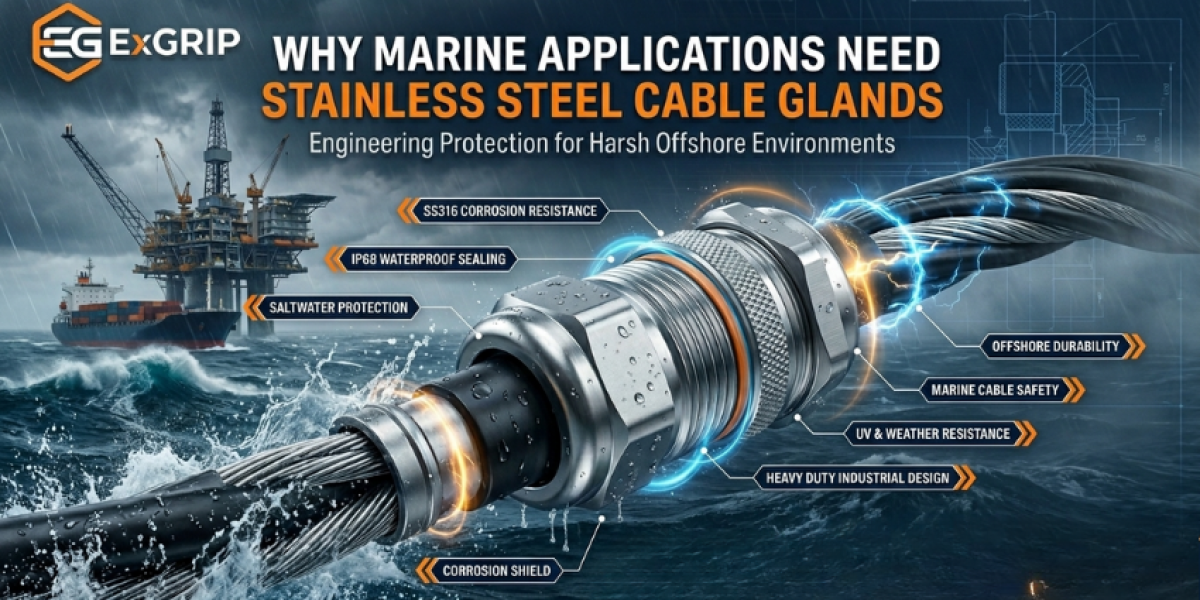
Marine environments are among the harshest operating conditions for electrical infrastructure. Constant exposure to saltwater, humidity, corrosion, UV radiation, vibration, and extreme weather creates serious challenges for cable protection systems. In these demanding conditions, using standard cable glands can quickly lead to rust, water ingress, cable deterioration, electrical failures, and expensive maintenance issues.
This is why stainless steel cable glands are essential for marine applications. Whether installed on offshore platforms, marine vessels, shipbuilding projects, coastal industries, desalination plants, offshore wind farms, or dockside electrical systems, stainless steel cable glands provide the durability and corrosion resistance required for long-term operational reliability.
Unlike standard brass or plastic glands, marine-grade stainless steel cable glands are engineered to withstand highly corrosive environments while maintaining secure cable retention, waterproof sealing, and mechanical strength. They play a critical role in preventing moisture ingress, protecting electrical enclosures, and ensuring safe power transmission in offshore and coastal installations.
This guide explains why marine applications require stainless steel cable glands, how they improve electrical safety, the differences between SS304 and SS316 cable glands, installation best practices, compliance standards, and how to select the right marine cable gland solution for industrial and offshore environments.
What Are Stainless Steel Cable Glands?
Stainless steel cable glands are industrial cable entry devices manufactured using corrosion-resistant stainless steel materials such as SS304 or SS316. These glands are specifically designed for harsh environments where exposure to moisture, chemicals, saltwater, and corrosion can damage standard cable entry systems.
A stainless steel cable gland performs several critical functions:
- Waterproof cable sealing
- Mechanical cable retention
- Corrosion protection
- Strain relief
- Dust ingress prevention
- Environmental sealing
- Grounding continuity
Marine cable glands are widely used in:
- Offshore oil & gas platforms
- Marine vessels
- Shipbuilding industries
- Naval infrastructure
- Coastal power plants
- Offshore wind energy systems
- Port electrical systems
- Desalination facilities
- Marine automation systems
Their rugged construction makes them ideal for environments where reliability and durability are critical.
Why Marine Applications Need Stainless Steel Cable Glands
1. Superior Corrosion Resistance
The biggest challenge in marine environments is corrosion caused by saltwater exposure and high humidity.
Stainless steel cable glands provide:
- Rust resistance
- Saltwater protection
- Long operational lifespan
- Reduced maintenance
- Improved reliability
SS316 cable glands are especially preferred because they contain molybdenum, which improves resistance against chloride corrosion found in seawater environments.
Without corrosion-resistant cable glands, electrical systems can fail prematurely.
2. Waterproof Protection Against Moisture Ingress
Marine electrical systems are continuously exposed to:
- Rainwater
- Ocean spray
- Humidity
- Condensation
- Washdown cleaning
Stainless steel IP68 cable glands provide reliable waterproof sealing that protects electrical enclosures and cables from water ingress.
Benefits include:
- Prevention of electrical short circuits
- Improved enclosure protection
- Reduced downtime
- Safer electrical systems
Proper sealing is essential for marine electrical safety.
3. Resistance to Extreme Weather Conditions
Marine applications experience:
- High winds
- Temperature fluctuations
- Storm exposure
- UV radiation
- Mechanical vibration
Stainless steel cable glands maintain structural integrity under these conditions and provide reliable cable retention even in demanding offshore installations.
4. Long-Term Durability in Harsh Environments
Marine infrastructure is expected to operate for decades with minimal maintenance.
Stainless steel cable glands offer:
- High mechanical strength
- Impact resistance
- UV resistance
- Long service life
- Chemical resistance
This reduces replacement costs and maintenance frequency.
5. Enhanced Safety for Critical Marine Systems
Electrical failures in marine environments can result in:
- Equipment shutdown
- Fire hazards
- Power interruptions
- Safety risks
Marine-grade stainless steel cable glands help ensure:
- Stable cable connections
- Secure grounding continuity
- Environmental protection
- Hazard prevention
This is especially important in offshore oil platforms and marine hazardous areas.
Types of Stainless Steel Cable Glands Used in Marine Applications
SS304 Cable Glands
Best for:
- Standard marine environments
- Indoor ship systems
- Moderate corrosion exposure
Advantages:
- Good corrosion resistance
- Strong mechanical performance
- Cost-effective
SS316 Cable Glands
Best for:
- Offshore platforms
- Saltwater exposure
- Coastal industries
- Chemical marine environments
Advantages:
- Superior chloride resistance
- Better anti-corrosion performance
- Longest lifespan
SS316 is the preferred choice for harsh marine conditions.
Double Compression Stainless Steel Cable Glands
Best for:
- Armored marine cables
- High vibration applications
- Offshore hazardous areas
Advantages:
- Enhanced sealing
- Better strain relief
- Strong cable retention
- Improved waterproof performance
Stainless Steel Cable Gland Selection Guide
| Parameter | SS304 Cable Gland | SS316 Cable Gland | Brass Cable Gland |
|---|---|---|---|
| Corrosion Resistance | High | Very High | Moderate |
| Saltwater Protection | Good | Excellent | Limited |
| Offshore Suitability | Moderate | Best | Low |
| Chemical Resistance | Good | Excellent | Moderate |
| Mechanical Strength | High | Very High | High |
| Waterproof Performance | IP66/IP68 | IP66/IP68 | IP66/IP68 |
| Marine Lifespan | Long | Very Long | Medium |
Important Factors When Selecting Marine Cable Glands
IP Rating
Marine cable glands should provide:
- IP66 protection
- IP67 sealing
- IP68 waterproof performance
Higher IP ratings offer better resistance against water ingress and dust contamination.
Cable Type Compatibility
Marine cable glands must support:
- Armored cables
- Unarmored cables
- Marine power cables
- Instrumentation cables
Correct gland selection improves cable retention and environmental sealing.
Thread Type Selection
Common marine thread types include:
- Metric
- NPT
- BSP
Thread compatibility is essential for enclosure sealing integrity.
Temperature Resistance
Marine installations often experience extreme environmental conditions. Stainless steel glands maintain sealing stability under fluctuating temperatures.
Why Stainless Steel Cable Glands Matter in Offshore Infrastructure
Marine infrastructure operates under constant environmental stress. Even minor cable sealing failures can lead to serious operational and safety issues.
Stainless steel cable glands provide:
- Reliable waterproof sealing
- Long-term corrosion protection
- Mechanical durability
- Reduced maintenance
- Improved operational safety
- Extended equipment lifespan
As offshore energy, marine automation, and coastal industries continue expanding globally, demand for high-performance SS316 cable glands and marine-grade cable entry systems is increasing rapidly.
Exgrip manufactures high-performance stainless steel cable glands designed for harsh industrial and marine environments.
Key advantages include:
- SS304 and SS316 cable gland solutions
- IP66/IP68 waterproof protection
- Precision-engineered marine cable glands
- Corrosion-resistant industrial designs
- Double compression cable glands
- Global export capability
- Strict industrial quality control
- Customized cable gland solutions
Exgrip products are engineered for reliability in demanding offshore and coastal applications.
Certifications & Compliance
Using certified cable glands is essential for industrial safety and global compliance. Certifications give confidence that the product can withstand demanding environments.
Key Certifications to Look For:
-
ATEX & IECEx: Required for explosive or hazardous areas
-
IP66 / IP67 / IP68 Ratings: Guarantee dust-tight and waterproof performance
-
RoHS & REACH Compliance: Ensure environmentally safe and lead-free materials
-
CSA / UL Approvals: Necessary for North American installations
At Exgrip, all cable gland types, including brass cable gland, waterproof cable gland, and specialty adapters like 90° and YADP, are manufactured with these certifications, making them reliable for industries worldwide.
Conclusion & Call-to-Action
Selecting the right cable gland, whether it’s a waterproof cable gland, brass cable gland, or using the correct cable gland accessories, is vital for industrial safety and system reliability.
At Exgrip, we provide a full range of cable glands, connectors, and accessories, certified with ATEX, IECEx, IP, RoHS, and REACH, suitable for any industrial or hazardous application.
📩 Talk to our technical team today at Exgrip.com
📞 Or call us directly for quick assistance!
Contact Us:
📞 Phone: +91 9537118899
🌐 Website: www.exgrip.com
📩 Request a Quote: Contact Page
FAQs
Why are stainless steel cable glands preferred for marine applications?
Stainless steel cable glands provide excellent corrosion resistance, waterproof sealing, and long-term durability in harsh marine and offshore environments exposed to saltwater and humidity.
What is the difference between SS304 and SS316 cable glands?
SS316 cable glands contain molybdenum, which improves resistance against chloride corrosion and saltwater exposure. SS316 is generally preferred for offshore and coastal environments.
What IP rating is recommended for marine cable glands?
IP68 cable glands are highly recommended because they provide superior waterproof protection and dust sealing for harsh marine conditions.
Can brass cable glands be used in marine environments?
Brass cable glands may be used in moderate environments, but stainless steel cable glands offer significantly better corrosion resistance for long-term offshore applications.
Why do marine cable glands fail?
Common causes include corrosion, incorrect installation torque, poor sealing, low-quality materials, and vibration loosening.
Are stainless steel cable glands suitable for offshore hazardous areas?
Yes. Stainless steel ATEX and IECEx certified cable glands are widely used in offshore oil & gas platforms and hazardous marine environments.