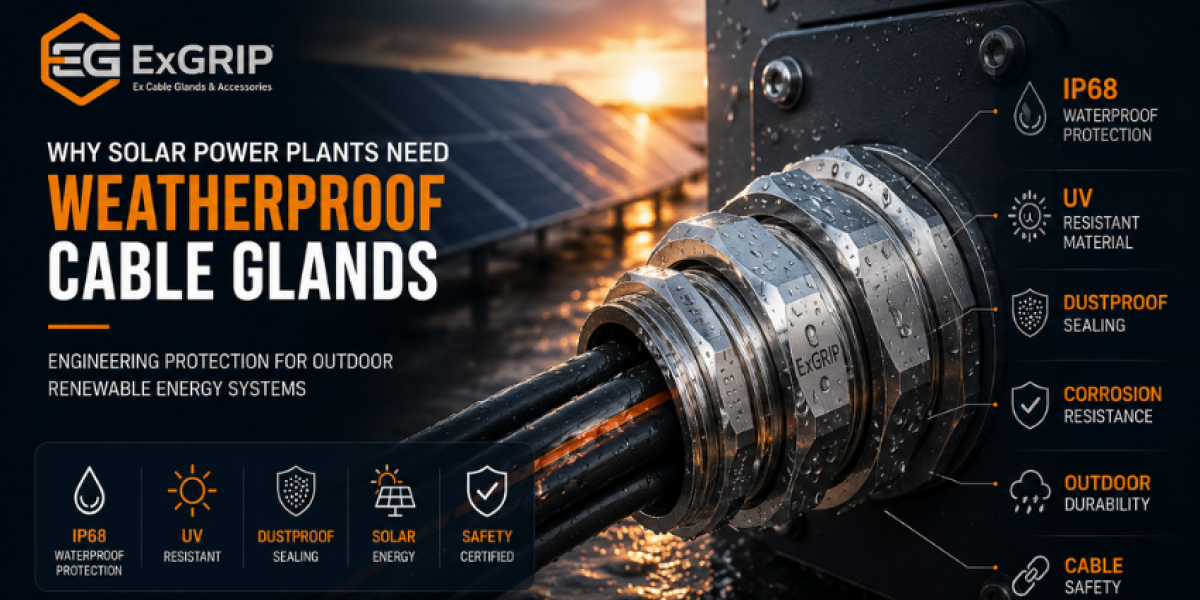
Solar power plants operate in some of the harshest outdoor environments where electrical systems are continuously exposed to rain, dust, UV radiation, heat, humidity, and temperature fluctuations. In these conditions, even a small failure in cable entry sealing can lead to water ingress, corrosion, electrical short circuits, system downtime, and expensive maintenance.
This is why weatherproof cable glands play a critical role in modern solar energy infrastructure. Whether it is a rooftop solar installation, utility-scale solar farm, photovoltaic inverter system, junction box, combiner box, or outdoor control panel, selecting the correct IP68 cable gland or waterproof cable gland directly impacts system safety, efficiency, and long-term operational reliability.
In solar applications, cable glands are not just cable entry accessories. They provide environmental sealing, strain relief, mechanical retention, UV resistance, dust protection, and grounding continuity for critical electrical connections. Poor-quality or incorrectly selected cable glands can reduce the lifespan of expensive solar equipment and create serious electrical hazards.
This guide explains why solar power plants require weatherproof cable glands, how to choose the correct gland type, common installation mistakes, technical selection criteria, and why compliance with international standards is essential for outdoor renewable energy systems.
What Are Weatherproof Cable Glands?
Weatherproof cable glands are specially engineered cable entry devices designed to protect electrical enclosures and cables from environmental conditions such as:
- Rainwater
- Dust ingress
- UV radiation
- Humidity
- Extreme heat
- Corrosion
- Outdoor contamination
These cable glands create a sealed connection between the cable and enclosure while maintaining ingress protection ratings such as IP66, IP67, and IP68.
In solar power plants, weatherproof cable glands are commonly used in:
- Solar inverter panels
- Combiner boxes
- Junction boxes
- String monitoring systems
- Outdoor distribution panels
- Battery energy storage systems
- Solar tracking systems
- DC cable management systems
Without proper waterproof sealing, moisture can enter electrical enclosures and damage sensitive solar components.
Why Solar Power Plants Need Weatherproof Cable Glands
1. Protection Against Water Ingress
Solar plants are installed outdoors where rainwater exposure is unavoidable. Weatherproof cable glands prevent water leakage into enclosures and maintain safe electrical connections.
Benefits include:
Prevention of short circuits
Reduced corrosion
Improved equipment lifespan
Safer electrical operation
Reduced maintenance costs
IP68 cable glands provide superior waterproof performance for solar applications exposed to heavy rainfall and washdown environments.
2. UV Resistance for Long-Term Outdoor Exposure
Solar installations remain exposed to direct sunlight for years. Standard cable glands may crack or degrade due to UV exposure.
High-quality weatherproof cable glands offer:
UV-resistant sealing materials
Outdoor-grade polymers
Long-term durability
Thermal stability
Resistance to sunlight degradation
This is critical for maintaining reliable sealing performance in photovoltaic systems.
3. Dust and Sand Protection
Solar farms located in desert or industrial regions face significant dust accumulation. Dust ingress can damage inverter systems and reduce equipment efficiency.
Weatherproof cable glands with IP66/IP68 ratings help prevent:
Dust contamination
Internal enclosure damage
Electrical failures
Premature component wear
Dustproof sealing is especially important in utility-scale solar projects.
4. Mechanical Cable Retention and Strain Relief
Strong winds, cable movement, and thermal expansion can place stress on electrical cables.
Cable glands provide:
Cable clamping
Mechanical retention
Strain relief
Reduced cable pull-out risk
Improved installation safety
Double compression cable glands are often preferred in high-vibration or outdoor renewable energy systems.
5. Corrosion Resistance in Harsh Environments
Many solar installations are located in coastal, humid, or chemically exposed environments where corrosion becomes a major issue.
Stainless steel cable glands and nickel-plated brass cable glands offer:
Corrosion resistance
Rust protection
Long service life
Outdoor reliability
This is especially important for floating solar plants and coastal renewable energy facilities.
Types of Cable Glands Used in Solar Power Plants
Nylon Weatherproof Cable Glands
Best for:
- Lightweight solar enclosures
- Cost-effective installations
- UV-resistant applications
Advantages:
- Corrosion resistant
- Lightweight
- Economical
- Good IP protection
Brass Cable Glands
Best for:
- Industrial solar installations
- Outdoor inverter systems
- Heavy-duty applications
Advantages:
- High mechanical strength
- Better durability
- Excellent grounding continuity
Stainless Steel Cable Glands
Best for:
- Coastal solar projects
- Chemical environments
- Offshore renewable systems
Advantages:
- Superior corrosion resistance
- Long lifespan
- High temperature resistance
Double Compression Cable Glands
Best for:
- Armored solar cables
- High vibration zones
- Critical power systems
Advantages:
- Enhanced sealing
- Better cable retention
- Higher environmental protection
Weatherproof Cable Gland Selection Guide for Solar Plants
| Parameter | Nylon Cable Gland | Brass Cable Gland | Stainless Steel Cable Gland |
|---|---|---|---|
| Corrosion Resistance | Medium | High | Very High |
| UV Resistance | High | High | Excellent |
| Mechanical Strength | Medium | High | Very High |
| Outdoor Durability | Good | Excellent | Excellent |
| Coastal Suitability | Limited | Moderate | Best |
| IP Rating | IP66/IP68 | IP66/IP68 | IP66/IP68 |
| Solar Application | Standard | Industrial | Harsh Environment |
Important Factors When Selecting Solar Cable Glands
Cable Diameter Range
Proper gland sizing ensures:
- Correct sealing
- Waterproof performance
- Reduced cable damage
Incorrect cable gland sizing is one of the most common causes of water ingress.
Thread Type Compatibility
Common thread standards include:
- Metric
- PG
- NPT
- BSP
Selection depends on the enclosure design and regional standards.
IP Rating Requirements
For outdoor solar applications:
- IP66 minimum recommended
- IP68 preferred for high exposure environments
Higher IP ratings provide better waterproof and dustproof protection.
Temperature Resistance
Solar sites experience extreme temperature changes. Cable glands should withstand:
- High daytime heat
- Cold nighttime temperatures
- Thermal cycling
Industrial-grade weatherproof cable glands provide stable sealing under fluctuating conditions.
Accessories Used With Weatherproof Cable Glands
Lock Nuts
Used to secure the gland firmly to the enclosure.
Earth Tags
Provide grounding continuity for metal cable glands.
Sealing Washers
Improve waterproof sealing on uneven enclosure surfaces.
Protect glands from dust, moisture, and corrosion buildup.
Leads to:
- Poor sealing
- Water ingress
- Cable damage
Cheap seals may crack due to UV exposure and heat.
Improper Installation Torque
Over-tightening damages seals while under-tightening reduces waterproof protection.
Using Indoor Cable Glands Outdoors
Indoor cable glands lack:
- UV resistance
- Weatherproof sealing
- Outdoor durability
Installation Guide for Solar Cable Glands
Step 1: Select Correct Cable Gland Size
Match gland size with cable outer diameter.
Step 2: Inspect Sealing Components
Check:
Rubber seals
Threads
Compression rings
Step 3: Install Gland Securely
Use proper tightening torque according to manufacturer specifications.
Step 4: Verify IP Sealing
Inspect for:
Gap openings
Loose fittings
Seal deformation
Step 5: Perform Periodic Inspection
Regularly inspect for:
UV degradation
Corrosion
Loose connections
Seal wear
Certifications & Compliance for Solar Cable Glands
IP66 / IP68
Ensures:
- Dustproof protection
- Waterproof sealing
- Outdoor reliability
RoHS Compliance
Restricts hazardous substances in industrial components.
CE Certification
Confirms conformity with international safety requirements.
ATEX & IECEx
Required for solar installations in hazardous or explosive environments such as battery storage systems and industrial renewable facilities.
Conclusion & Call-to-Action
Selecting the right cable gland, whether it’s a waterproof cable gland, brass cable gland, or using the correct cable gland accessories, is vital for industrial safety and system reliability.
At Exgrip, we provide a full range of cable glands, connectors, and accessories, certified with ATEX, IECEx, IP, RoHS, and REACH, suitable for any industrial or hazardous application.
📩 Talk to our technical team today at Exgrip.com
📞 Or call us directly for quick assistance!
Contact Us:
📞 Phone: +91 9537118899
🌐 Website: www.exgrip.com
📩 Request a Quote: Contact Page
FAQs
What is the best cable gland for solar power plants?
IP68 weatherproof cable glands are generally preferred for solar applications because they provide superior waterproof sealing, UV resistance, and outdoor durability. Stainless steel cable glands are ideal for coastal or corrosive environments, while brass cable glands are commonly used in industrial solar systems.
Why are IP68 cable glands important in solar installations?
IP68 cable glands provide protection against dust ingress and long-term water exposure. Solar systems operate outdoors continuously, making waterproof cable sealing critical for preventing electrical failures and corrosion.
Can nylon cable glands be used in solar applications?
Yes, UV-resistant nylon cable glands are suitable for lightweight and standard outdoor solar installations. However, brass or stainless steel cable glands are preferred for heavy-duty industrial environments.
What causes water leakage in solar cable glands?
Common causes include incorrect gland sizing, poor installation torque, damaged seals, low-quality gasket materials, and improper thread compatibility.
Are stainless steel cable glands necessary for coastal solar plants?
Yes. Coastal environments expose cable glands to saltwater and humidity, which can cause corrosion. Stainless steel cable glands provide excellent corrosion resistance and long-term outdoor reliability.
What IP rating is recommended for outdoor solar cable glands?
IP66 is generally the minimum recommended rating, while IP68 cable glands are preferred for harsh outdoor conditions and critical solar infrastructure.