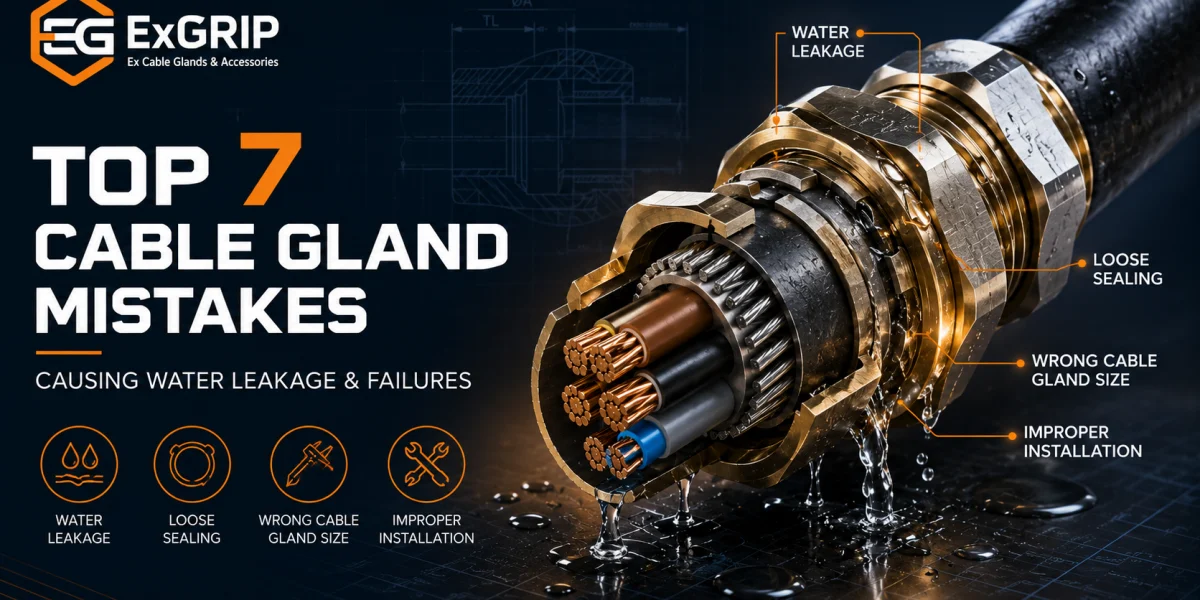
In industrial environments, even a small mistake in cable gland installation can lead to serious problems especially water leakage, corrosion, and complete system failure. Whether you’re working with armoured cable, SWA cable, or power cable, proper gland selection and installation is critical.
Many failures are not due to poor product quality, but because of incorrect practices like using the wrong cable gland size, improper sealing, or ignoring the cable gland size chart. These small oversights can compromise the entire system’s safety and reliability.
In this guide, we break down the top 7 cable gland installation mistakes that cause leakage and failures and how you can avoid them.
Why Cable Gland Installation Matters?
In industrial applications, a cable gland is not just a fitting it is the first line of defense against water, dust, and environmental damage. Whether you are working with armoured cable, SWA cable, or power cable, proper installation directly impacts system safety and lifespan.
One of the most common causes of failure is not the gland itself, but incorrect practices such as choosing the wrong cable gland size, ignoring the cable gland size chart, or poor sealing during installation. These issues often lead to water leakage, corrosion, and costly downtime.
Top 7 Cable Gland Installation Mistakes
Cable Gland Size Chart & Selection Chart
1. Selecting the Wrong Cable Gland Size
Problem:
Using a gland that does not match the cable diameter.
Why It Happens:
Impact:
- Loose fit → water leakage
- Tight fit → damaged seals
Solution:
2. Improper Tightening of the Cable Gland
Problem
Over-tightening or under-tightening of gland components.
Why It Happens
- Lack of torque control
- Manual tightening without proper tools
Impact
- Over-tightening damages sealing rings
- Under-tightening allows water ingress
Solution
- Use appropriate tools for tightening
- Ensure uniform compression of sealing rings
3. Incorrect Installation on Armoured Cable
Problem
Improper clamping of armour in double compression glands.
Why It Happens
- Lack of technical knowledge
- Skipping installation steps
Impact
- Water ingress through armour gaps
- Reduced mechanical strength
Solution
- Use the correct gland for armoured SWA cable
- Ensure proper clamping of the armour
Important
Using single compression glands for armoured cables can result in immediate sealing failure.
4. Ignoring IP Rating Requirements
Problem
Using cable glands without considering IP protection ratings.
Why It Happens
- Cost-saving decisions
- Lack of awareness
Impact
- Water and dust ingress
- Damage to electrical equipment
Solution
- Select IP65, IP66, or IP68 rated glands based on the environment
- Match the gland rating with the application requirements
5. Poor Cable Preparation
Problem
Incorrect stripping of cable sheath and armour.
Why It Happens
- Use of improper tools
- Lack of experience
Impact
- Uneven sealing surface
- Increased risk of water leakage
Solution
- Use proper cable stripping tools
- Follow standard stripping procedures
6. Using the Wrong Type of Cable Gland
Problem
Mismatch between cable type and gland type.
Why It Happens
- Lack of product knowledge
- Cost-cutting approach
Impact
- Inadequate sealing
- Mechanical instability
Quick Selection Guide
| Cable Type |
Recommended Gland Type |
| Unarmoured Cable |
Single Compression Gland |
| Armoured Cable |
Double Compression Gland |
| Power Cable |
Application-Specific Gland |
Solution
Select the gland type based on cable construction and application requirements.
7. Ignoring Environmental Conditions
Problem
Using standard cable glands in harsh environments.
Why It Happens
- Lack of site analysis
- One-type-fits-all approach
Impact
- Corrosion
- Seal failure
- Long-term water leakage
Solution
- Use brass or stainless steel cable glands
- Choose weatherproof and corrosion-resistant designs
Note
Outdoor and industrial environments require careful selection of gland material and sealing performance.
Conclusion & Call-to-Action
Most cable gland failures are preventable. From selecting the wrong cable gland size to improper installation on armoured cable, each mistake increases the risk of water leakage and system failure.
By following correct installation practices, using the right gland type, and referring to a proper cable gland size chart, you can ensure long-term safety and performance of your power cable systems.
At Exgrip, we focus on delivering precision-engineered cable glands designed for real industrial conditions. But remember even the best cable gland performs only as well as its installation.
 Talk to our technical team today at Exgrip.com
 Or call us directly for quick assistance!
Contact Us:
Phone: +91 9537118899
 Website: www.exgrip.com
Request a Quote: Contact Page
FAQs