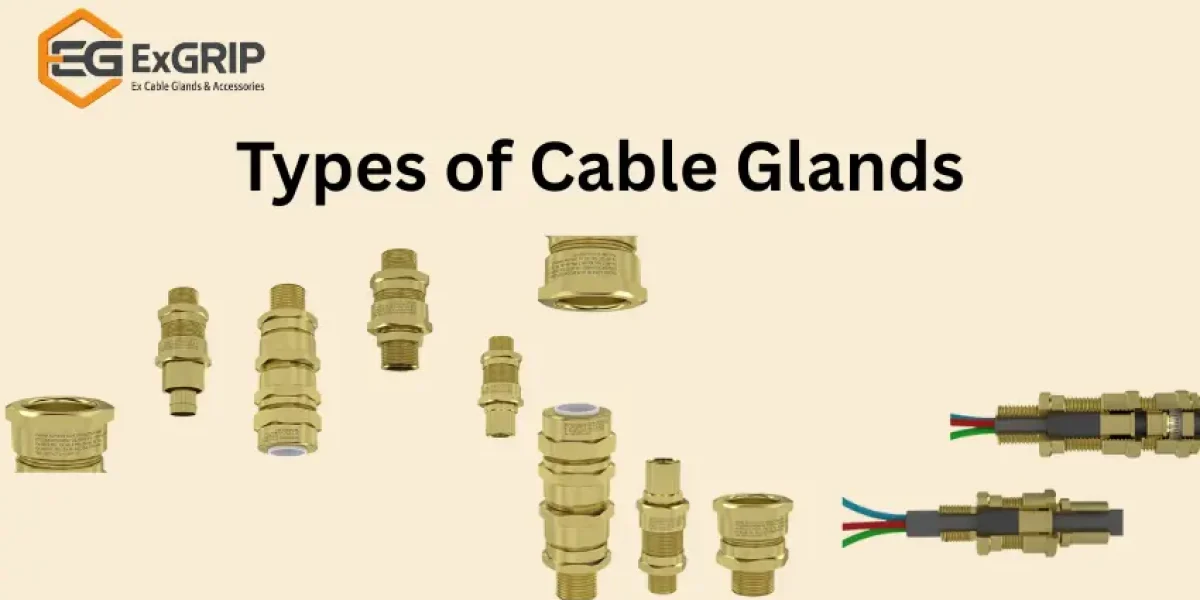
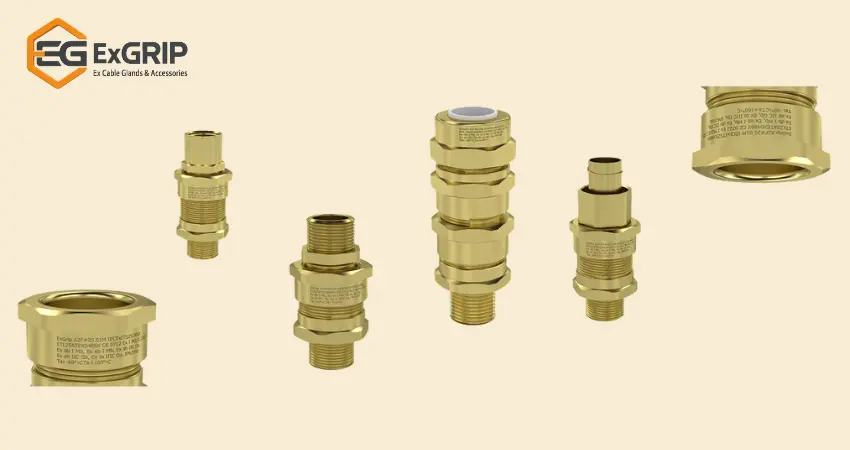
Cable glands may be small, but their role in protecting, securing, and grounding electrical cables is absolutely essential. In this detailed blog, we’ll walk you through the various types of cable glands, their uses, materials, and standards. Whether you’re a technician, engineer, or procurement specialist, this guide will help you make the right choice based on application, environment, and technical requirements.
What Are Cable Glands?
Cable glands are mechanical fittings that secure the end of a cable to equipment. They help maintain the enclosure’s integrity, provide strain relief, and in some cases, ensure electrical continuity. You’ll find cable glands used in a wide range of environments indoor and outdoor, industrial and commercial, dry and wet.
Types of Cable Glands (By Application, Construction, and Compliance)
There’s no one-size-fits-all when it comes to cable glands. Depending on the application and environmental conditions, you’ll need the right type. Here are some classifications:
Used when cables have an additional layer of protective armor (steel wire, aluminum strip, braided wires). These cable glands offer mechanical retention and electrical bonding.
Common in industrial, railway, and mining operations
Used when cables lack any internal armor. These are simpler in construction but still provide ingress protection and strain relief.
Suitable for telecom, marine, and general electrical wiring
Lightweight and cost-effective
Based on Material
Metal Cable Glands :
Made from materials like brass, stainless steel, and nickel-plated aluminum. These are used where strength, temperature resistance, and durability are key.
Ideal for industrial zones, chemical plants, and outdoor use
Often used with armored cables
Plastic Cable Glands :
Made from polyamide (nylon), these are suitable for less harsh environments.
Ideal for light-duty applications and indoor installations
Corrosion-resistant and non-conductive
Based on Thread Type
Metric, PG, NPT, and BSP thread types are available to match regional or equipment-specific standards.
Metric: Most common worldwide
PG (Panzer Gewinde): Traditional German standard
NPT (National Pipe Thread): Common in North America
BSP (British Standard Pipe): Used in the UK and parts of Asia
Based on Use Case
Some cable glands are specifically designed for unique operational needs.
EMC Cable Glands :
Protect sensitive equipment from electromagnetic interference (EMI)
Ensures cable shielding is grounded effectively
Used in data centers, telecoms, and control panels
Marine Cable Glands :
Designed for waterproof sealing
Suitable for underwater or high-humidity environments
Common in ships, ports, and wastewater systems
Electrical Cable Glands :
Provide grounding and strain relief
Often have an earthing tag or clamp
Used in switchgear, panels, and generators
Fire-Stop Cable Glands :
Resists fire and contains flame spread
Maintains electrical integrity during fire exposure
Used in railways, metros, and defense sectors
Cable Glands According to BS 6121 Standard
The BS 6121 standard offers a classification system based on design and function. Although it’s an older standard, it remains widely followed across various industries.
Type A Cable Glands
Used for unarmored rubber or plastic sheathed cables. Four subtypes exist:
A1: Basic seal for outer jacket
A2: IP68-rated sealing
A3: Includes bonding for the inner jacket
A4: A2 + electrical bonding
Great for general installations, both indoors and outdoors.
Type B Cable Glands
Designed for single wire armor cables.
Made from brass
Ideal for low-moisture indoor environments
Provides mechanical lock and electrical continuity
Type C Cable Glands
Used with armored/braided plastic or rubber sheathed cables.
Made of brass or stainless steel
Includes IP68 sealing for harsh environments
Suitable for outdoor use
Type D Cable Glands
Support armor termination and internal sealing:
D1: IP68 inner seal
D2: D1 + electrical bond
Ideal for industrial setups needing strong retention and water sealing.
Type E Cable Glands
Heavy-duty version of Type C:
E1: Outer and inner seals, IP68 rated
E2: E1 + electrical bond
Used where maximum protection and earth continuity are essential.
BS 6121 Suffixes
W: Single wire armored
T: Pliable wire armored
X: Wire braided
Y: Aluminum strip armored
Z: Double steel tape armored
Example: A gland labeled “CW” is a Type C for single wire armored cables.
Cable Glands Designed for Particular Use
Some cable glands are custom-engineered for particular jobs. Here’s a breakdown:
Electromagnetic Compatibility (EMC)
Shields both the machine and cable from EMI
Often used in sensitive electronics, control rooms, and communication towers
Marine Cable Glands
Designed for underwater or moisture-prone installations
Features dual seals for complete waterproofing
Used in marine ships, offshore rigs, and desalination plants
Electric Cable Glands
Feature earthing tags to redirect current safely
Prevent electrocution
Common in industrial machinery and heavy electrical panels
Fire-Stop Glands
Built to withstand flames, smoke, and pressure
Protects people and systems in transport or defense
Cable glands are a small yet critical part of electrical systems across industries like marine, telecom, railways, energy, and manufacturing. These fittings ensure safety, efficiency, and durability—so it’s important to choose the right product from a reliable supplier.
At Exgrip, we specialize in manufacturing and supplying a wide range of high-quality cable glands to meet all industrial and commercial needs. Whether you’re working in harsh outdoor conditions, sensitive electronic environments, or high-risk fire zones, we have certified solutions tailored to your requirements.
Tailored guidance to help you pick the right gland
Explore our product range or contact our team today to get a custom quote or technical support.
Final Thoughts
Choosing the right cable gland is not just about cost it’s about safety, performance, and long-term reliability. Every application has unique demands, and understanding the differences between various cable gland types ensures smoother installations, longer equipment life, and fewer hazards.
We hope this detailed guide has helped clarify the vast world of cable glands. Still not sure which gland fits your needs? We’re here to help.