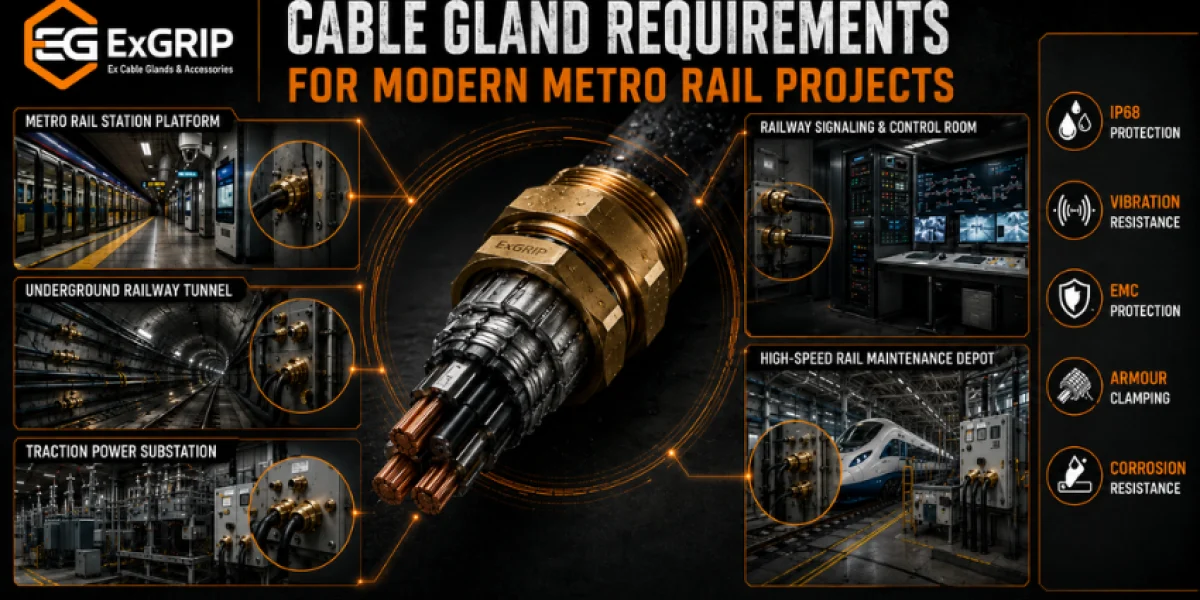
Modern metro rail stations, underground transportation networks, and every new high speed rail corridor depend heavily on safe and reliable electrical infrastructure. From signaling systems and traction power networks to communication equipment and control panels, every cable connection must remain protected against vibration, dust, moisture, and electromagnetic interference. This is where a high-quality cable gland becomes a critical component.
As urban transportation expands through new metro projects and the rapid development of high speed rail in India, engineers are increasingly focused on long-term reliability and safety. Whether it is an underground station such as the famous Esplanade Metro Rail Station, elevated rail infrastructure, or modern railway depots, properly selected cable glands help ensure uninterrupted operation of electrical and communication systems while meeting stringent railway safety standards.
Why Cable Glands Are Critical in Railway Infrastructure?
Railway environments expose cables to some of the most demanding operating conditions.
Railway environments present several operational and environmental challenges that can affect cable performance and system reliability.
| Challenge | Impact on Cable Systems |
|---|---|
| Continuous Vibration | Can loosen cable connections and cause mechanical wear |
| Dust, Rain, and Humidity | Increases the risk of contamination and moisture ingress |
| Electromagnetic Interference (EMI) | May disrupt signaling and communication systems |
| Mechanical Stress | Can damage cable insulation and conductors |
| Temperature Fluctuations | Affects cable durability and sealing performance |
| Fire and Smoke Requirements | Demands compliance with strict railway safety standards |
| Extended Maintenance Intervals | Requires long-lasting and reliable cable protection |
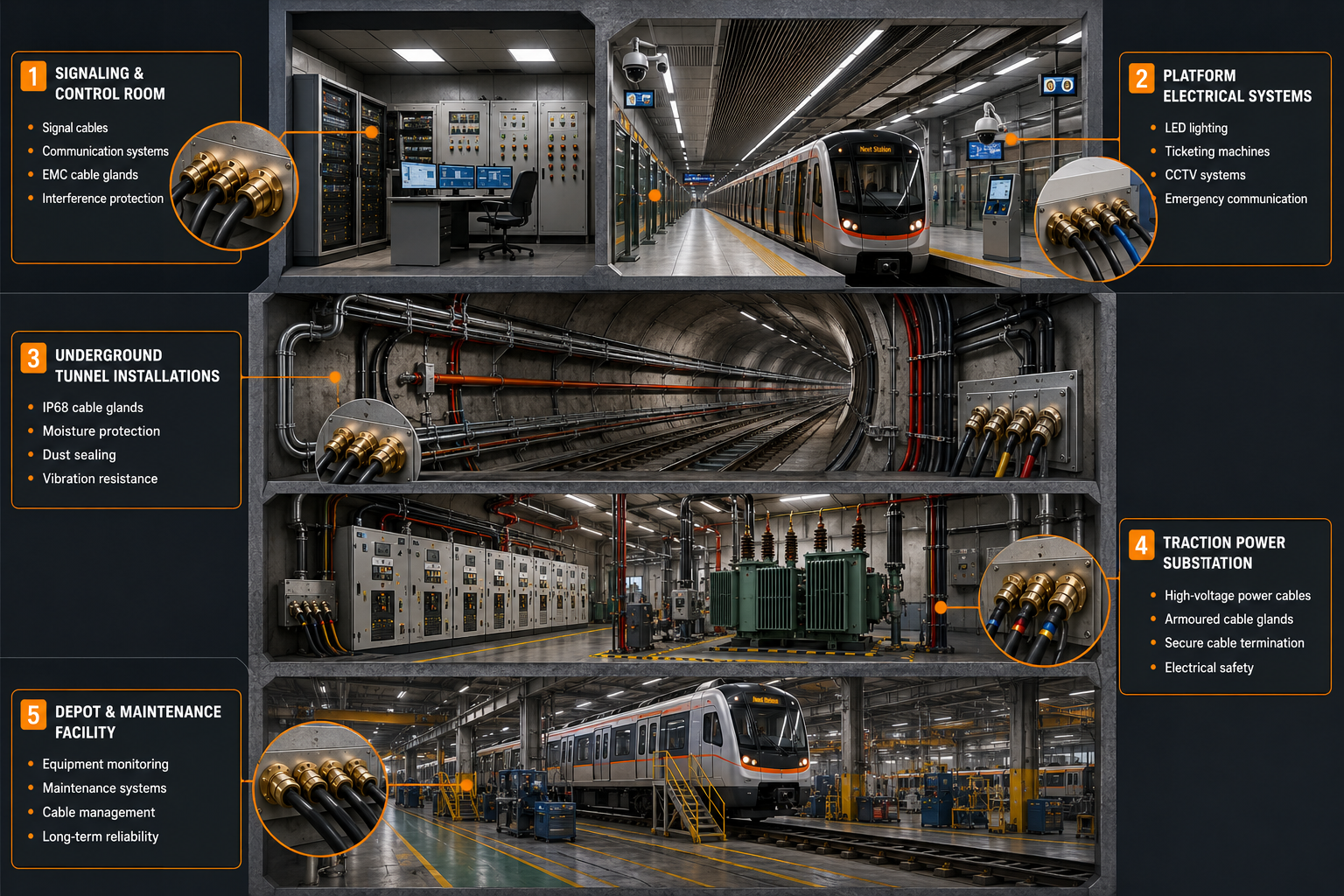
Key Applications of Cable Glands in Metro Rail Stations
Cable Gland Requirements for High-Speed Rail Projects
Unlike conventional railways, high speed rail systems operate under far more demanding conditions.
Essential Requirements
1. High Vibration Resistance
Trains traveling at speeds exceeding 250 km/h generate significant vibration.
Cable glands must:
- Maintain cable retention
- Prevent loosening
- Protect conductor integrity
2. Superior Ingress Protection
Railway infrastructure often faces extreme environmental conditions.
Recommended ratings:
| Environment | Minimum IP Rating |
|---|---|
| Indoor Panels | IP66 |
| Outdoor Installations | IP67 |
| Tunnel Applications | IP68 |
| High Exposure Zones | IP68/IP69 |
High-performance brass cable glands are commonly selected for these applications.
3. Electromagnetic Compatibility (EMC)Modern railway networks rely on:
- Signaling systems
- Communication networks
- CCTV systems
- Automatic train control
EMC cable glands help minimize electromagnetic interference and maintain signal integrity.
4. Fire Safety ComplianceRail projects require strict adherence to fire protection standards.
Cable gland systems should support:
- Low smoke emissions
- Halogen-free cable systems
- Flame-retardant installations
- Emergency evacuation safety requirements
Why use a Cable Gland Size Chart?
Selecting the right gland is just as important as choosing the right cable. That’s where the cable gland size chart and cable gland selection chart come in. These charts act as quick references to match the outer diameter of a cable with the correct gland size.
-
Ensures a tight and reliable seal
-
Prevents water, dust, or gas entry
-
Avoids loose fittings that may cause cable damage
-
Simplifies installation for engineers and electricians
A cable gland selection chart also highlights which gland type is suitable for armoured, unarmoured, or flexible cables. For example, a brass cable gland is often selected for armoured cables in oil & gas industries, while a waterproof cable gland is chosen for outdoor solar or marine applications.
Best Cable Gland Materials for Metro Rail Applications
Advantages
- Excellent mechanical strength
- Corrosion resistance
- Long service life
- Suitable for demanding railway environments
Advantages
- Extreme corrosion protection
- Ideal for coastal rail projects
- Suitable for harsh environmental conditions
Advantages
- Enhanced durability
- Improved corrosion resistance
- Popular in modern railway electrical installations
Certifications & Compliance
Using certified cable glands is essential for industrial safety and global compliance. Certifications give confidence that the product can withstand demanding environments.
Key Certifications to Look For:
-
ATEX & IECEx: Required for explosive or hazardous areas
-
IP66 / IP67 / IP68 Ratings: Guarantee dust-tight and waterproof performance
-
RoHS & REACH Compliance: Ensure environmentally safe and lead-free materials
-
CSA / UL Approvals: Necessary for North American installations
At Exgrip, all cable gland types, including brass cable gland, waterproof cable gland, and specialty adapters like 90° and YADP, are manufactured with these certifications, making them reliable for industries worldwide.
Conclusion & Call-to-Action
The rapid growth of metro rail stations, smart transportation networks, and every new high speed rail corridor is increasing the demand for reliable electrical infrastructure and advanced cable management solutions. From signaling systems and platform electrical equipment to tunnel installations and traction power substations, selecting the right cable gland plays a critical role in ensuring safety, performance, and long-term operational reliability.
At Exgrip, we offer a comprehensive range of industrial cable glands, armoured cable glands, EMC cable glands, connectors, adapters, reducers, and cable accessories certified to ATEX, IECEx, IP, RoHS, and REACH standards. Our solutions are engineered to meet the demanding requirements of metro rail stations, high-speed rail projects, railway electrification systems, and other critical industrial applications worldwide.
📩 Talk to our technical team today at Exgrip.com
📞 Or call us directly for quick assistance!
Contact Us:
📞 Phone: +91 9537118899
🌐 Website: www.exgrip.com
📩 Request a Quote: Contact Page
FAQs
Why are cable glands important in metro rail projects?
Cable glands provide sealing, strain relief, and cable retention, protecting electrical systems from vibration, dust, moisture, and environmental damage.
Which IP rating is recommended for railway cable glands?
IP67 and IP68 cable glands are generally recommended for outdoor railway and tunnel installations.
What type of cable gland is best for high-speed rail applications?
Brass and stainless steel cable glands are commonly preferred due to their strength, durability, and vibration resistance.
Are EMC cable glands necessary in railway systems?
Yes. EMC cable glands help reduce electromagnetic interference and maintain reliable signaling and communication performance.
Can cable glands improve railway safety?
Absolutely. Proper cable gland selection reduces electrical failures, prevents water ingress, and supports overall railway safety and reliability.
What factors should engineers consider when selecting cable glands for rail projects?
Engineers should consider cable type, IP rating, vibration resistance, EMC protection, material compatibility, fire safety requirements, and environmental conditions.