
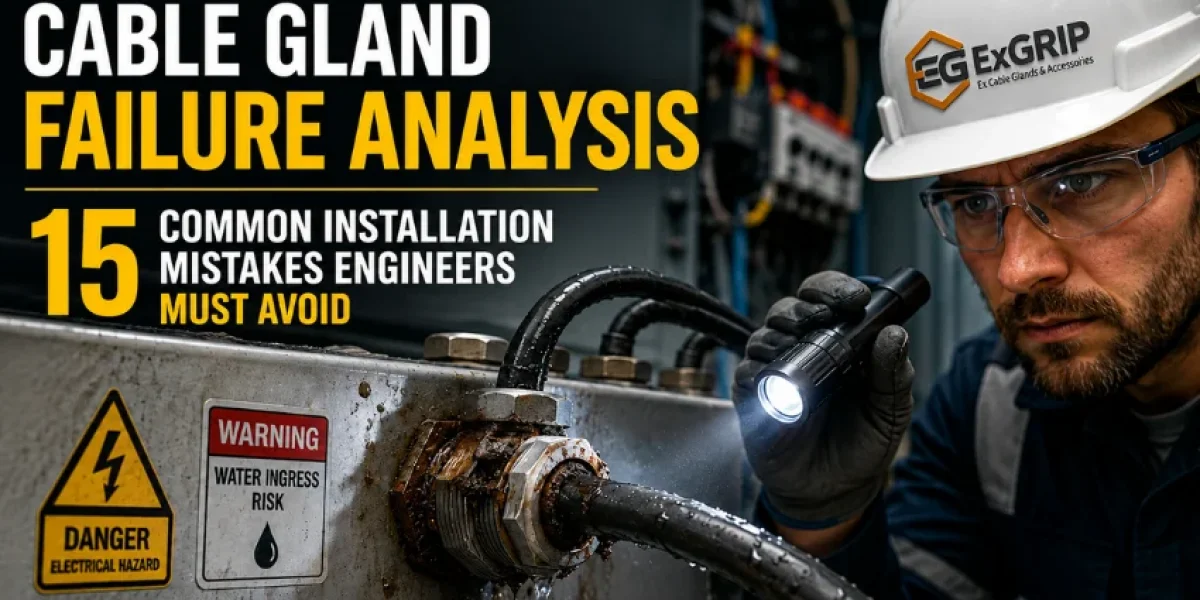
Cable gland failure is one of the most common causes of electrical enclosure problems, water ingress, equipment damage, and safety risks in industrial installations. A cable gland is designed to provide secure cable retention, environmental sealing, strain relief, and protection against dust, moisture, vibration, and hazardous conditions.
However, even a high-quality cable gland can fail if the wrong gland is selected or if the cable gland installation is not performed correctly. Most failures are caused by installation mistakes rather than manufacturing defects.
In this cable gland failure analysis guide, we highlight the 15 most common cable gland installation mistakes, their impact on system performance, and the best practices engineers can follow to improve cable gland reliability and prevent costly downtime.
Understanding the Purpose of a Cable Gland
Before analyzing failures, it is important to understand what a cable gland is designed to do.
A cable gland serves several critical functions:
- Secures the cable mechanically
- Prevents cable pull-out
- Maintains enclosure IP ratings
- Protects against dust and water ingress
- Provides strain relief
- Ensures electrical continuity
- Grounds armoured cables
- Maintains explosion protection in hazardous areas
When any of these functions are compromised, the entire electrical installation may become vulnerable to failure.
Why Cable Gland Failures Occur
Most cable gland failures occur because of incorrect cable gland selection or poor installation practices.
Common causes include:
- Incorrect cable gland size
- Wrong cable gland type
- Improper installation
- Incompatible accessories
- Harsh environmental conditions
- Lack of inspection and maintenance
- Failure to follow manufacturer guidelines
Even a small installation mistake can eventually lead to water ingress, corrosion, insulation damage, equipment failure, and loss of IP protection.
What Happens When a Cable Gland Fails?
The consequences of cable gland failure can range from minor maintenance issues to catastrophic safety incidents.
| Failure Type | Potential Consequence |
|---|---|
| Water ingress | Equipment damage |
| Dust ingress | Electrical faults |
| Loose cable retention | Cable pull-out |
| Armour termination failure | Earthing issues |
| Corrosion | Reduced service life |
| IP rating failure | Environmental contamination |
| Hazardous area failure | Explosion risk |
| Ground continuity loss | Electrical safety hazards |
15 Common Cable Gland Installation Mistakes Engineers Must Avoid
Selecting the Wrong Cable Gland Size
Incorrect cable gland sizing is one of the most common causes of failure.
Every cable gland is designed to accommodate a specific cable diameter range. If the cable is too small, the sealing element cannot compress properly. If the cable is too large, the gland may not fit correctly.
Consequences- Water ingress
- Dust penetration
- Reduced strain relief
- Loss of IP rating
Always verify the cable’s outer diameter and compare it with the cable gland manufacturer’s cable acceptance range before installation.
Using the Wrong Cable Gland Type
Different cable types require different cable gland designs.
Examples include:
- Armoured cable glands
- Unarmoured cable glands
- EMC cable glands
- Hazardous area cable glands
- Marine-grade cable glands
Using the wrong cable gland can compromise grounding, sealing, and mechanical retention.
Consequences- Poor cable support
- Grounding failures
- Certification issues
Select cable glands specifically designed for the cable construction and application environment.
Improper Tightening During Installation
Improper cable gland tightening is a common installation mistake.
Insufficient tightening prevents proper sealing, while inconsistent tightening can create weak points.
Consequences
- Moisture ingress
- Dust contamination
- Reduced cable retention
Best Practice
Follow cable gland torque recommendations provided by the manufacturer.
Over-Tightening the Cable Gland
Excessive tightening can damage the cable gland sealing system.
Over-compression may deform sealing rings and damage cable jackets.
Consequences- Seal deterioration
- Cable insulation damage
- Reduced cable gland lifespan
Use calibrated tools and avoid excessive force during installation.
Under-Tightening the Compression Seal
When cable gland compression nuts are not tightened sufficiently, the sealing element cannot create a proper environmental barrier.
Consequences- Water leakage
- Dust ingress
- Reduced IP protection
Ensure all cable gland components are tightened according to installation instructions.
Incorrect Armour Clamping
For armoured cable gland installations, proper armour termination is essential.
Incorrect armour clamping can interrupt grounding continuity and compromise mechanical retention.
Consequences- Earthing failures
- Increased fault current risks
- Reduced cable stability
Verify armour engagement and grounding continuity during installation.
Installing Damaged Sealing Components
Cable gland sealing rings and gaskets are critical for maintaining ingress protection.
Damaged seals often occur due to:
- Improper handling
- Sharp cable edges
- Incorrect assembly
- Water ingress
- Dust contamination
- Premature failure
Inspect all cable gland sealing components before installation and replace damaged parts immediately.
Using Incompatible Thread Types
Cable glands are available with various thread standards, including:
- Metric threads
- NPT threads
- PG threads
- BSP threads
Mixing incompatible thread types creates gaps that compromise sealing performance.
Consequences- Leakage paths
- Mechanical instability
- Reduced enclosure protection
Always verify thread compatibility between the cable gland and enclosure.
Forgetting IP Washers or Sealing Accessories
Many installation failures occur because accessories are overlooked.
IP washers and sealing washers are often required to maintain enclosure protection.
Consequences- Moisture ingress
- Reduced IP rating
- Corrosion around cable gland entry points
Use manufacturer-approved cable gland accessories for every installation.
Using Cables Outside the Approved Diameter Range
Even when the cable gland size appears correct, problems occur when cable diameters fall outside the approved sealing range.
Consequences- Poor compression
- Seal failure
- Reduced retention
Measure actual cable diameter rather than relying solely on cable specifications.
Poor Earthing and Bonding Practices
Proper grounding is essential for cable gland safety and EMC performance.
Poor earthing practices can create dangerous fault conditions.
Consequences- Electrical hazards
- Equipment malfunction
- Increased electromagnetic interference
Verify grounding continuity during commissioning and maintenance inspections.
Using Indoor Cable Glands in Outdoor Applications
Outdoor environments expose cable glands to:
- Rain
- UV radiation
- Temperature fluctuations
- Humidity
Indoor-rated cable glands may not withstand these conditions.
Consequences- Seal degradation
- Cracking
- Water ingress
Use outdoor-rated cable glands with suitable IP ratings.
Ignoring Corrosive Environmental Conditions
Chemical plants, offshore platforms, wastewater facilities, and marine environments expose cable glands to aggressive substances.
Standard brass cable glands may not provide sufficient corrosion resistance.
Consequences- Material degradation
- Thread damage
- Seal failure
Use stainless steel cable glands in corrosive environments.
Mixing Non-Certified Components
In hazardous areas, every cable gland component must comply with certification requirements.
Using uncertified adapters, reducers, or stopping plugs can invalidate the entire installation.
Consequences- Regulatory non-compliance
- Safety risks
- Certification failure
Use certified accessories from reputable manufacturers and verify compatibility.
Skipping Final Inspection and Testing
Many installation issues can be identified before commissioning through a simple inspection process.
Unfortunately, final inspections are often overlooked due to project deadlines.
Consequences- Hidden installation defects
- Early equipment failures
- Increased maintenance costs
Conduct a documented inspection before energizing equipment.
Best Practices for Long-Term Cable Gland Reliability
To maximize cable gland performance and service life:
- Use certified cable glands from reputable manufacturers.
- Follow cable gland installation instructions carefully.
- Select cable gland materials suitable for the environment.
- Conduct routine inspections.
- Replace damaged seals immediately.
- Verify grounding continuity regularly.
- Use compatible accessories.
- Maintain proper inspection and maintenance records.
These best practices significantly reduce the likelihood of cable gland-related failures.
Installation & Maintenance
Proper installation and maintenance are key to getting the best performance from your cable glands. Whether it’s a waterproof cable gland, brass cable gland, or standard connector, following best practices ensures longevity and safety.
Installation Tips:
-
Follow the recommended torque values to avoid leaks or damage
-
Use appropriate cable gland accessories, such as O-rings or adapters, to maintain IP or watertight integrity
-
Protect the cable’s bend radius; use 90° adapters for sharp corners
-
Ensure grounding for metallic glands and connectors
Maintenance Tips:
-
Inspect seals and washers regularly for wear or damage
-
Retighten glands after thermal cycles or heavy use
-
Keep certification datasheets (ATEX, IECEx, IP) handy for audits
-
Replace worn-out glands promptly to avoid electrical hazards
Regular maintenance prolongs the life of your cable gland solutions and ensures safe, compliant operation.
Conclusion & Call-to-Action
Cable gland failure is often preventable when proper cable gland selection, installation, and maintenance procedures are followed. Although a cable gland may seem like a simple component, it plays a critical role in electrical safety, environmental protection, and equipment reliability.
The most common cable gland installation mistakes including incorrect sizing, improper tightening, poor armour termination, thread mismatches, damaged seals, and inadequate inspections—can lead to water ingress, corrosion, grounding failures, IP rating loss, and hazardous-area safety risks.
At Exgrip, we provide a full range of cable glands, connectors, and accessories, certified with ATEX, IECEx, IP, RoHS, and REACH, suitable for any industrial or hazardous application.
📩 Talk to our technical team today at Exgrip.com
📞 Or call us directly for quick assistance!
Contact Us:
📞 Phone: +91 9537118899
🌐 Website: www.exgrip.com
📩 Request a Quote: Contact Page
FAQs
What is the most common cause of cable gland failure?
Incorrect cable gland sizing is one of the leading causes of cable gland failure because it directly affects sealing performance, cable retention, and IP protection.
Can an IP68 cable gland still leak?
Yes. Even an IP68 cable gland can leak if the installation is incorrect, over-tightened, under-tightened, or used with an unsuitable cable diameter.
Why is armour clamping important in cable glands?
Armour clamping ensures proper grounding continuity and mechanical retention for armoured cable glands, helping maintain electrical safety and system reliability.
What accessories improve cable gland sealing performance?
IP washers, sealing washers, locknuts, adapters, reducers, and certified stopping plugs help improve sealing performance and maintain enclosure protection.
Which cable gland material is best for corrosive environments?
Stainless steel cable glands are generally the preferred choice for marine, offshore, chemical processing, and other highly corrosive environments due to their superior corrosion resistance.
Can incorrect cable gland installation affect hazardous area certification?
Yes. Improper cable gland installation can compromise explosion protection and may invalidate ATEX, IECEx, or other hazardous-area certifications.