
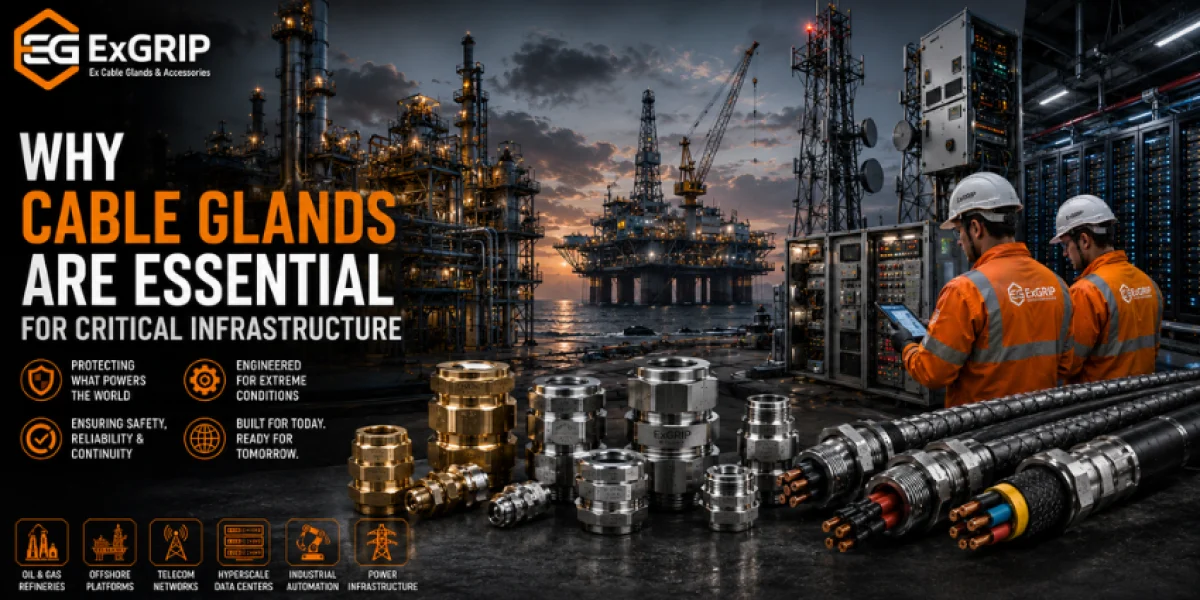
Modern economies depend on reliable infrastructure to support energy production, communication networks, transportation systems, industrial operations, and digital services. Whether rebuilding an offshore platform, expanding a telecom network, upgrading a port facility, or constructing a new data center, every project relies on secure electrical connectivity.
In simple terms, infrastructure meaning refers to the fundamental physical and organizational systems that enable societies and industries to function effectively. These systems include power generation facilities, transportation networks, telecommunications systems, marine ports, and digital infrastructure.
One often-overlooked component that plays a critical role across these sectors is the cable gland. While relatively small in size, cable glands provide essential protection for electrical cables, helping maintain safety, reliability, and operational continuity in demanding environments.
As governments and private organizations continue investing in oil and gas, marine, telecom, and data center infrastructure, selecting the correct cable gland solutions has become increasingly important for long-term infrastructure resilience.
Understanding the Importance of Infrastructure
Infrastructure serves as the foundation of economic growth and industrial development.
Key infrastructure sectors include:
| Infrastructure Sector | Examples |
|---|---|
| Energy Infrastructure | Oil refineries, LNG terminals, power plants |
| Marine Infrastructure | Ports, offshore platforms, shipyards |
| Telecom Infrastructure | Mobile towers, fiber networks, communication hubs |
| Digital Infrastructure | Data centers, cloud facilities, server farms |
| Industrial Infrastructure | Manufacturing plants and processing facilities |
Without reliable electrical connectivity, these critical systems cannot operate safely or efficiently.
What Is a Cable Gland?
A cable gland is a mechanical device designed to securely attach and seal electrical cables entering equipment, enclosures, junction boxes, and control panels.
Its primary functions include:
- Cable retention
- Environmental sealing
- Strain relief
- Dust protection
- Water ingress prevention
- Corrosion resistance
- Hazardous area protection
Although often considered a small component, cable glands play a major role in protecting expensive infrastructure assets.
Why Cable Glands Matter During Infrastructure Rebuilding Projects?
Rebuilding critical infrastructure often involves replacing damaged electrical systems and installing new equipment designed for decades of service.
Poor cable management can lead to:
- Water ingress
- Equipment failure
- Electrical hazards
- Corrosion
- Unplanned downtime
- Increased maintenance costs
Proper cable gland selection helps eliminate these risks.
The Role of Cable Glands in Oil and Gas Infrastructure
Supporting Reliable Operations in Harsh Environments
The global oil and gas industry operates in some of the world’s most demanding environments.
Applications include:
- Offshore platforms
- Refineries
- LNG facilities
- Petrochemical plants
- Pipeline infrastructure
- Storage terminals
Electrical systems in these environments face exposure to:
- Extreme temperatures
- Corrosive chemicals
- Salt-laden air
- Mechanical vibration
- Potentially explosive atmospheres
Why Cable Glands Are Critical
Cable glands provide:
- Explosion protection
- Environmental sealing
- Cable retention
- Compliance with hazardous-area standards
- Long-term equipment reliability
As investments in oil production and energy infrastructure continue worldwide, reliable cable protection remains essential.
Why Marine Infrastructure Depends on High-Performance Cable Glands?
The marine industry relies heavily on electrical systems for navigation, communications, cargo handling, and operational safety.
Applications include:
- Commercial ports
- Shipyards
- Offshore vessels
- Naval facilities
- Container terminals
Marine Environment Challenges
| Challenge | Impact |
|---|---|
| Saltwater Exposure | Accelerated corrosion |
| Moisture | Equipment damage |
| Continuous Vibration | Cable stress |
| Weather Conditions | Seal degradation |
Cable Gland Benefits for Marine Applications
- Corrosion resistance
- Water-tight sealing
- Reliable cable retention
- Long-term durability
As global shipping networks and marine traffic continue expanding, dependable cable management solutions become increasingly important.
The Importance of Cable Glands in Telecom Infrastructure
Modern economies depend on robust telecom infrastructure.
Telecommunication networks support:
- Mobile communication
- Internet connectivity
- Fiber optic networks
- Emergency communication systems
- Industrial communications
Telecom Infrastructure Challenges
Telecom installations are often exposed to:
- Rain
- Dust
- UV radiation
- Temperature fluctuations
- Wind loads
Cable glands help protect critical communication equipment from environmental damage while maintaining uninterrupted connectivity.
Key Telecom Applications
- Cellular towers
- Fiber optic cabinets
- Outdoor communication shelters
- Network switching stations
Common Cable Gland Types Used in Critical Infrastructure
| Cable Gland Type | Typical Application |
|---|---|
| Brass Cable Glands | Industrial infrastructure |
| Stainless Steel Cable Glands | Marine environments |
| Armoured Cable Glands | Power infrastructure |
| Explosion-Proof Cable Glands | Oil and gas facilities |
| Hazardous Area Cable Glands | Petrochemical plants |
| EMC Cable Glands | Telecom and data centers |
Selecting the correct cable gland type improves safety, compliance, and operational reliability.
Why Manufacturers and EPC Contractors Prioritize Quality Cable Glands
For infrastructure projects expected to operate for decades, component reliability matters.
Quality cable glands help:
- Extend equipment lifespan
- Reduce maintenance costs
- Improve safety
- Support regulatory compliance
- Protect critical assets
- Minimize downtime
The cost of cable gland failure is often significantly higher than the cost of selecting the correct solution from the start.
Conclusion & Call-to-Action
As investments in oil and gas, marine, telecom, and data center infrastructure continue to grow, reliable electrical connectivity remains a fundamental requirement for successful infrastructure projects.
While often overlooked, the cable gland plays a critical role in protecting cables, maintaining equipment integrity, and ensuring long-term operational reliability. From offshore platforms and marine ports to telecom networks and advanced data infrastructure, cable glands help safeguard the systems that power modern economies.
Whether selecting the correct cable gland size for a new installation or specifying solutions for large-scale infrastructure projects, engineers and procurement teams must prioritize quality, durability, and environmental protection. As infrastructure modernization accelerates worldwide, dependable cable gland solutions will remain an essential component of resilient and future-ready industrial systems.
📩 Talk to our technical team today at Exgrip.com
📞 Or call us directly for quick assistance!
Contact Us:
📞 Phone: +91 9537118899
🌐 Website: www.exgrip.com
📩 Request a Quote: Contact Page
FAQs
Why are cable glands important in oil and gas facilities?
They provide sealing, cable retention, and hazardous-area protection in demanding environments.
How are cable glands used in marine applications?
They protect electrical systems from saltwater, moisture, and corrosion.
Why does telecom infrastructure require cable glands?
Cable glands protect communication equipment from environmental conditions and ensure network reliability.
What is Data Center Infrastructure Management (DCIM)?
DCIM is the process of monitoring and managing data center power, cooling, and IT infrastructure.
What cable gland types are commonly used in infrastructure projects?
Brass, stainless steel, armoured, explosion-proof, hazardous-area, and EMC cable glands.