
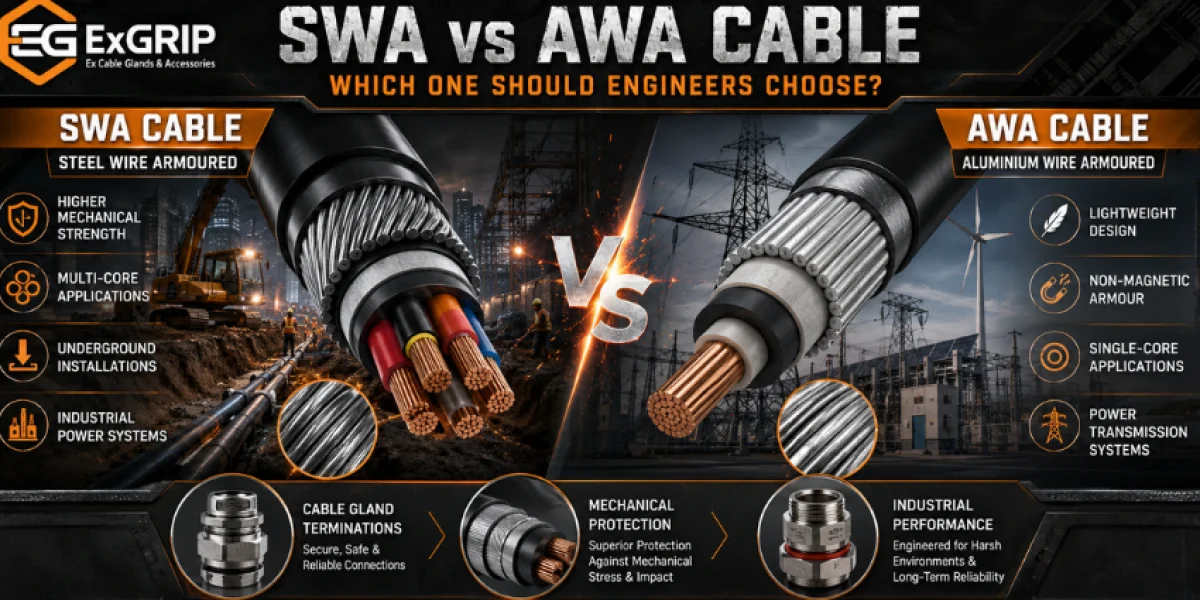
Modern infrastructure projects require reliable cable protection to ensure electrical safety, mechanical strength, and long-term performance. Whether engineers are designing power distribution systems, industrial plants, renewable energy facilities, or commercial buildings, choosing between SWA, SWA cable, and AWA armored cable solutions remains a critical decision.
In 2026, as industries demand higher durability and stricter safety compliance, many engineers are evaluating the advantages of SWA cable and AWA cable for different installation environments. While both cable types provide mechanical protection, their construction, applications, and performance characteristics differ significantly. Understanding these differences helps engineers select the most suitable armored cable for their projects.
Understanding Armoured Cables
Armoured cables are designed to protect electrical conductors against external mechanical damage, impact, crushing forces, and environmental conditions.
Their armor layer acts as a protective barrier that improves cable durability and installation reliability.
Why Armoured Cables Are Important
✓ Enhanced mechanical protection
✓ Improved cable lifespan
✓ Increased installation safety
✓ Better resistance to external impacts
✓ Suitable for harsh industrial environments
✓ Reduced maintenance requirements
What is SWA Cable?
SWA Meaning
SWA (Steel Wire Armoured) cable is one of the most widely used armored power cables worldwide.
It consists of steel wire armor surrounding the cable bedding and insulation layers, providing strong mechanical protection.
Typical SWA Cable Construction
Components
| Layer | Purpose |
|---|---|
| Conductor | Carries electrical current |
| Insulation | Electrical protection |
| Bedding | Protects insulation |
| Steel Wire Armour | Mechanical protection |
| Outer Sheath | Environmental protection |
Key Features of SWA Cable
✓ High tensile strength
✓ Excellent mechanical protection
✓ Suitable for underground installations
✓ Ideal for outdoor environments
✓ Commonly used for power distribution
What is AWA Cable?
AWA Meaning
AWA (Aluminium Wire Armoured) cable uses aluminum wire armor instead of steel wire armor.
AWA is primarily designed for single-core cable applications where magnetic effects from steel armor must be avoided.
Typical AWA Cable Construction Components
| Layer | Purpose |
| Conductor | Power transmission |
| Insulation | Electrical isolation |
| Bedding | Layer protection |
| Aluminium Wire Armour | Mechanical protection |
| Outer Sheath | Environmental protection |
Key Features of AWA Cable
✓ Lightweight construction
✓ Non-magnetic armor
✓ Suitable for single-core cables
✓ Good corrosion resistance
✓ Easier handling during installation
SWA vs AWA Cable: Key Differences
| Feature | SWA Cable |
AWA Cable |
| Armour Material | Steel Wire | Aluminium Wire |
| Weight | Heavier | Lighter |
| Mechanical Strength | Very High | High |
| Magnetic Properties | Magnetic | Non-Magnetic |
| Single-Core Use | Not Preferred | Ideal |
| Multi-Core Use | Common | Less Common |
| Installation Environment | Industrial & Outdoor | Power Transmission Systems |
| Cost | Generally Lower | Often Higher |
Cable Gland Size Chart for Armoured Cable :
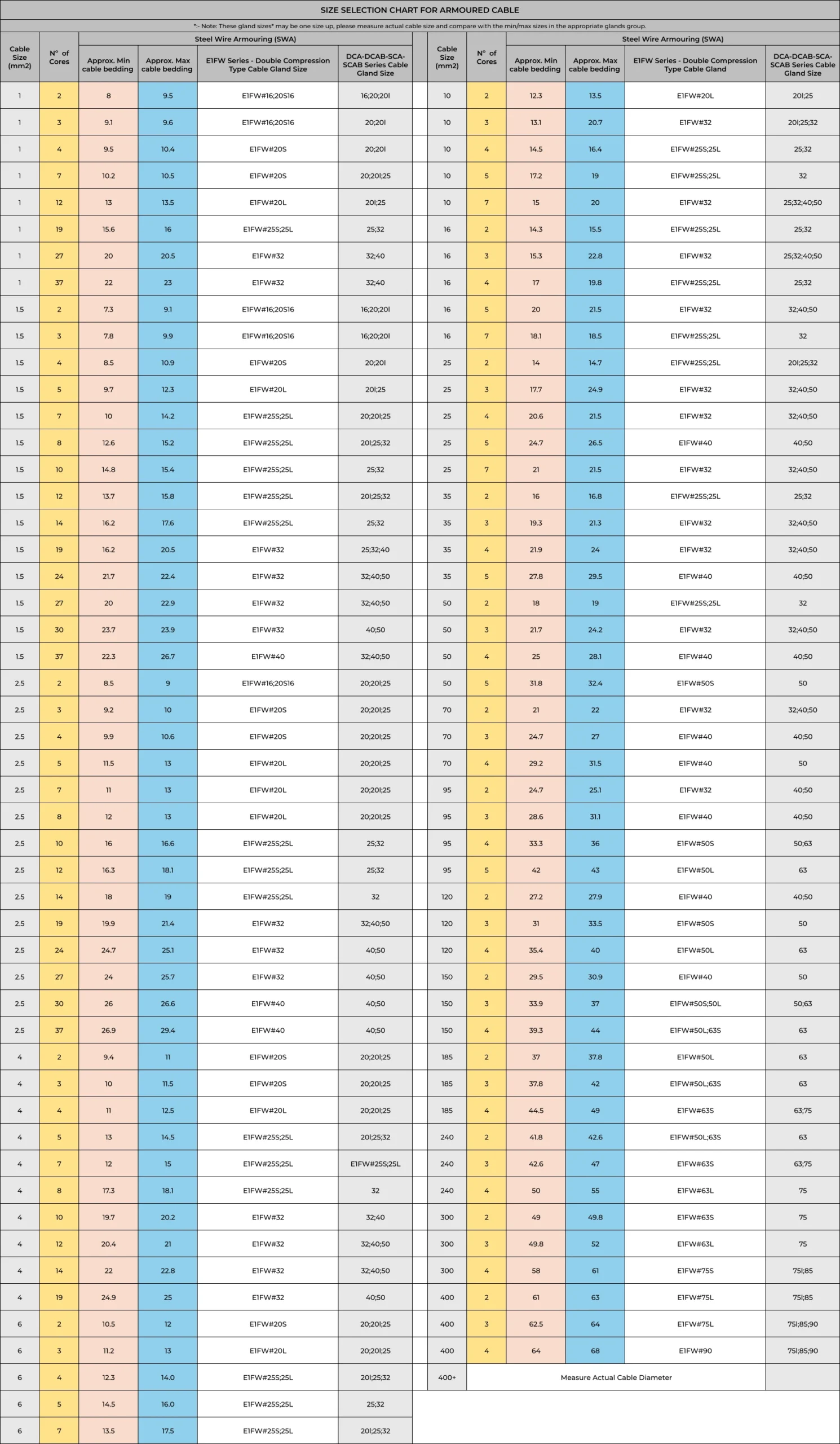
Cable Gland Selection for SWA and AWA Cables
Selecting the correct cable gland is equally important as selecting the cable itself.
For SWA Cable
Engineers typically use:
- Brass SWA Cable Glands
- BW Cable Glands
- CW Cable Glands
- Double Compression Cable Glands
These provide armor clamping, earth continuity, and environmental sealing.
For AWA Cable
Cable gland selection should ensure:
- Secure mechanical retention
- Effective cable sealing
- Reliable grounding arrangements
- Long-term corrosion resistance
Conclusion & Call-to-Action
The choice between SWA cable and AWA cable depends on installation requirements, cable configuration, and operational conditions. SWA cable remains the preferred solution for multi-core and heavy-duty industrial applications, while AWA cable excels in single-core installations where non-magnetic properties are required.
For engineers planning projects in 2026, understanding the differences between SWA and AWA helps improve system reliability, safety, and long-term performance.
At Exgrip, we support industrial, infrastructure, utility, and power distribution projects with high-quality cable gland solutions designed for armored cable installations. Whether working with SWA cable or AWA cable, selecting the correct cable gland ensures secure armor clamping, environmental sealing, and dependable electrical performance throughout the cable system lifecycle.
📩 Talk to our technical team today at Exgrip.com
📞 Or call us directly for quick assistance!
Contact Us:
📞 Phone: +91 9537118899
🌐 Website: www.exgrip.com
📩 Request a Quote: Contact Page
FAQs
What does SWA stand for?
SWA stands for Steel Wire Armoured cable, a cable designed with steel wire armor for enhanced mechanical protection.
What does AWA stand for?
AWA stands for Aluminium Wire Armoured cable, which uses aluminum wire armor and is commonly used for single-core cables.
Which is stronger, SWA or AWA cable?
SWA cable generally offers higher mechanical strength because steel wire armor provides greater impact resistance.
Why is AWA used for single-core cables?
AWA uses non-magnetic aluminum armor, preventing magnetic losses that can occur with steel armor in single-core applications.
Do SWA and AWA cables require cable glands?
Yes. Proper cable glands are essential for securing the cable, maintaining armor clamping, providing earth continuity, and ensuring environmental sealing.
How can I select the correct SWA cable gland size?
Using the right size ensures proper sealing and protection. See our SWA cable gland size chart guide for details