
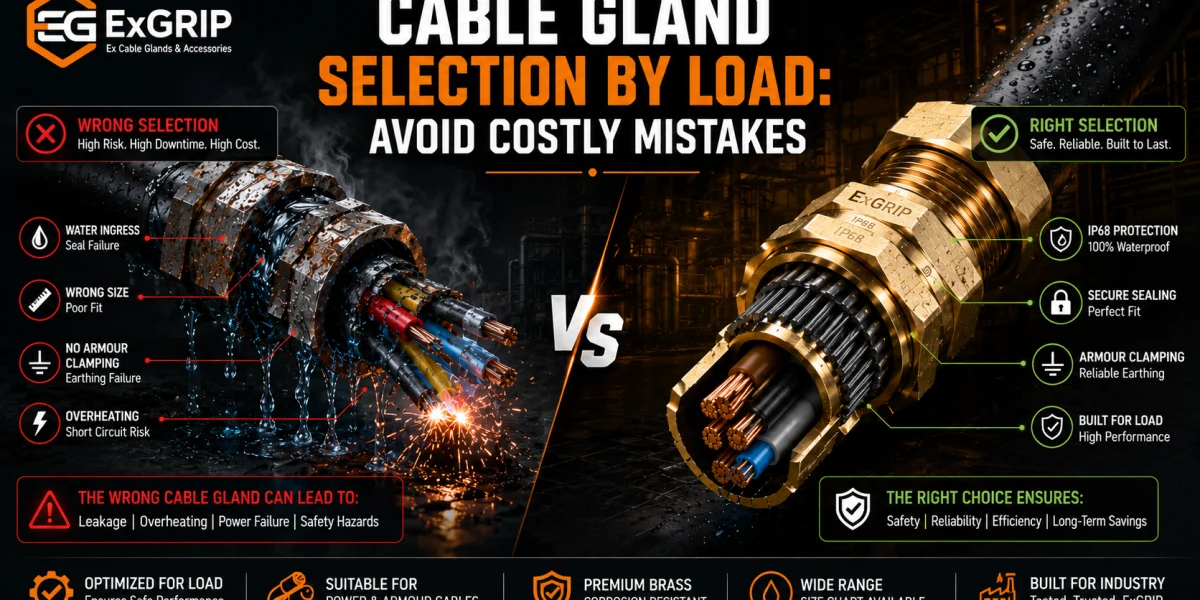
In industrial environments, selecting the right cable gland is often treated as a routine task. However, many engineers make a critical mistake they focus only on cable gland size or refer to a cable gland size chart, ignoring the most important factor: electrical load carried by the power cable.
This leads to using the wrong cable gland, especially in industrial power cables, where load directly impacts heat generation, mechanical stress, and sealing performance. A poor cable gland selection not only risks failure but can cause overheating, water ingress, and even hazardous breakdowns in power cable installation.
Why Engineers Choose the Wrong Cable Gland?
In many industrial projects, cable gland selection is treated as a routine procurement task rather than an engineering decision. As a result, the selection process is often based on convenience instead of performance requirements.
Most engineers typically rely on the following factors:
- Cable outer diameter (OD): Matching the gland size with the cable using a cable gland size chart
- Availability: Choosing whatever gland is readily available in stock
- Cost considerations: Opting for lower-cost options to meet budget constraints
- Basic cable gland types: Selecting between standard types without deeper analysis
While these factors are relevant, they represent only a partial approach and often lead to incorrect selection.
A reliable cable gland selection must go beyond size and availability. The following parameters are frequently overlooked, yet they are essential for long-term performance and safety:
- Electrical Load (Current Capacity):
Higher load generates more heat, which affects sealing integrity and material performance. - Heat Dissipation:
Inadequate gland selection can trap heat, leading to insulation degradation and premature failure. - Environmental Exposure:
Conditions such as moisture, dust, chemicals, and UV exposure demand specific gland materials and IP ratings. - Mechanical Stress:
Heavy industrial power cables exert significant pull and vibration, requiring robust gland construction and secure clamping.
Focusing only on cable size without considering load, environment, and mechanical conditions is one of the primary reasons engineers end up selecting the wrong cable gland. A correct approach integrates all these factors to ensure durability, safety, and performance in real-world industrial applications.
Reality Check: What Actually Matters
| Factor | Often Considered | Actually Critical |
|---|---|---|
| Cable Size | Yes | Yes |
| Electrical Load | No | Critical |
| IP Rating | Sometimes | Essential |
| Environment | Ignored | Critical |
| Cable Type (Armoured) | Partial | Important |
How Electrical Load Affects Cable Gland Selection
Electrical load directly influences:
1. Heat Generation
- High load = more heat
- Heat expands cable insulation
- Poor gland = seal failure
2. Mechanical Stress
- Heavy current cables are thicker & heavier
- Require stronger industrial cable glands
3. Sealing Performance
- Heat + expansion breaks cable sealing
- Leads to moisture ingress even in IP68 cable gland
Load-Based Application Comparison
| Parameter | Low Load Cables | High Load Power Cables |
|---|---|---|
| Cable Type | Control / Signal | Industrial Power Cables |
| Heat Generation | Low | High |
| Recommended Gland | Single Compression | Double Compression Cable Gland |
| Material | Plastic / Light Brass | Brass Cable Gland |
| Sealing Requirement | Basic | High (Waterproof Cable Gland) |
Correct Cable Gland Selection Process (Step-by-Step)
- Check current rating of power cable
- Classify as low, medium, or high load
- Use cable gland size in mm
- Refer to armoured cable gland size chart
- Armoured cable → Use armoured cable gland
- Unarmoured → Use standard gland
| Application Type | Recommended Gland Type |
|---|---|
| Indoor, low load | Single Compression |
| Outdoor, high load | Double Compression Cable Gland |
| Hazardous area | Hazardous Area Cable Gland |
| Wet environments | IP68 Cable Gland |
- Dust → Sealed gland
- Water → Waterproof cable gland
- Chemicals → Corrosion-resistant brass
- Minimum IP65 for industrial
- IP68 for outdoor/heavy-duty
Installation & Maintenance
Proper installation and maintenance are key to getting the best performance from your cable glands. Whether it’s a waterproof cable gland, brass cable gland, or standard connector, following best practices ensures longevity and safety.
Installation Tips:
-
Follow the recommended torque values to avoid leaks or damage
-
Use appropriate cable gland accessories, such as O-rings or adapters, to maintain IP or watertight integrity
-
Protect the cable’s bend radius; use 90° adapters for sharp corners
-
Ensure grounding for metallic glands and connectors
Maintenance Tips:
-
Inspect seals and washers regularly for wear or damage
-
Retighten glands after thermal cycles or heavy use
-
Keep certification datasheets (ATEX, IECEx, IP) handy for audits
-
Replace worn-out glands promptly to avoid electrical hazards
Regular maintenance prolongs the life of your cable gland solutions and ensures safe, compliant operation.
Conclusion & Call-to-Action
Choosing the right cable gland is not just about matching size from a cable gland size chart. It’s about understanding how electrical load, environment, and cable type interact.
If you ignore load, you risk selecting the wrong cable gland, leading to failures in power cable installation. For reliable and safe operations, always choose industrial cable glands designed for your specific application.
Want expert help selecting the right gland? Explore Exgrip’s premium range of industrial cable glands designed for performance and durability.
📩 Talk to our technical team today at Exgrip.com
📞 Or call us directly for quick assistance!
Contact Us:
📞 Phone: +91 9537118899
🌐 Website: www.exgrip.com
📩 Request a Quote: Contact Page
FAQs
How does electrical load affect cable gland selection?
Electrical load affects heat generation and mechanical stress, which impacts sealing and durability of the cable gland.
Can I use a single compression gland for power cables?
Not recommended for high-load applications. Use double compression cable glands for better sealing and safety.
What is the best cable gland for armoured cables?
Double compression brass cable glands are best for armoured cables.
Why is IP rating important in cable glands?
It ensures protection against dust and water, critical for industrial environments.
What happens if I use the wrong cable gland?
It can cause overheating, water ingress, cable damage, and system failure.
How do I choose the right cable gland size?
Measure cable OD and refer to a cable gland size chart, but also consider load and environment.