In hazardous industrial environments such as oil refineries, chemical plants, and gas processing units, selecting the correct cable gland for hazardous area applications is not optional—it is critical for safety, compliance, and operational reliability. A wrong selection can lead to equipment failure, gas leaks, or even catastrophic explosions.
Engineers and procurement teams often struggle with one key question: what is the correct cable gland for Zone 1 vs Zone 2 hazardous areas? The answer lies in understanding certification standards like ATEX cable gland and IECEx cable gland, along with environmental conditions and installation requirements.
This expert guide provides a complete, practical breakdown of hazardous area cable gland selection, helping you make technically sound and compliant decisions.
What is a Cable Gland for Hazardous Area?
A cable gland for hazardous area is a specially engineered sealing device used to secure cables entering electrical equipment in explosive atmospheres. These glands are designed to:
Prevent the entry of gases, dust, and moisture
Maintain enclosure integrity (IP ratings like IP66/IP68 cable gland)
Avoid ignition sources such as sparks or heat transfer
In hazardous zones, explosion proof cable gland designs ensure that any internal explosion does not propagate outside the enclosure.
Understanding Hazardous Zones: Zone 1 vs Zone 2
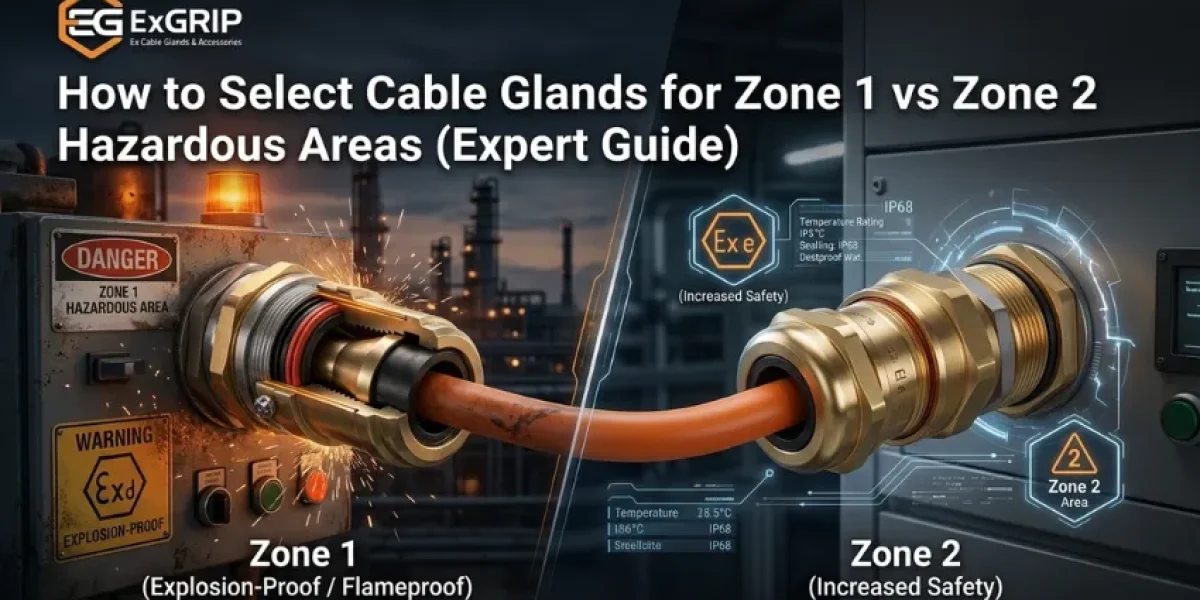
Zone 1 (High Risk Area)
Explosive gases are likely to occur during normal operation
Requires high-integrity explosion proof cable gland
Mandatory compliance with ATEX cable gland or IECEx cable gland standards
Zone 2 (Moderate Risk Area)
Explosive atmosphere occurs rarely and for short durations
Slightly less stringent but still requires certified solutions
Cost-effective options possible without compromising safety
Types of Cable Glands for Hazardous Areas
1. Double Compression Cable Gland
Best for armored cables
Provides dual sealing (inner + outer sheath)
Ideal for high-risk zones (Zone 1)
2. Single Compression Cable Gland
Suitable for unarmored cables
Used in less critical environments (Zone 2)
3. Explosion Proof Cable Gland
Designed for flameproof enclosures
Prevents flame propagation
4. EMC Cable Gland
Protects against electromagnetic interference
Used in sensitive industrial systems
Why use a Cable Gland Size Chart?
Selecting the right gland is just as important as choosing the right cable. That’s where the cable gland size chart and cable gland selection chart come in. These charts act as quick references to match the outer diameter of a cable with the correct gland size.
-
Ensures a tight and reliable seal
-
Prevents water, dust, or gas entry
-
Avoids loose fittings that may cause cable damage
-
Simplifies installation for engineers and electricians
A cable gland selection chart also highlights which gland type is suitable for armoured, unarmoured, or flexible cables. For example, a brass cable gland is often selected for armoured cables in oil & gas industries, while a waterproof cable gland is chosen for outdoor solar or marine applications.
Size Chart & Selection Guide :
| Parameter | Option 1 | Option 2 | Option 3 |
|---|---|---|---|
| Thread Type | Metric | NPT | PG |
| Cable Diameter | 6–12 mm | 12–20 mm | 20–32 mm |
| Material | Brass | Stainless Steel | Nickel-Plated Brass |
| Application | Zone 2 | Zone 1 | Corrosive Environments |
Key Selection Factors:
Thread Type: Must match enclosure entry
Cable Diameter Range: Ensure tight sealing
Material: Stainless steel for corrosive areas
Application Suitability: Match with zone classification
Accessories Used With Cable Glands
To ensure proper installation and performance, the following accessories are used:
- Lock Nuts: Secure gland inside enclosure
- Earth Tags: Provide grounding continuity
- Shrouds: Protect against dust and moisture
- Sealing Washers: Improve ingress protection
These accessories enhance the reliability of industrial cable gland selection guide practices.
Connector Compatibility
When selecting a cable gland for hazardous area, compatibility is critical:
Armored Cables
Require double compression cable gland
Used in heavy-duty industrial environments
Unarmored Cables
Use single compression glands
Suitable for light-duty applications
IP Ratings
IP66: Dust-tight and water-resistant
IP68 cable gland: Fully waterproof for submersion
Temperature Range
Typical: -20°C to +80°C
Special glands available for extreme conditions
Installation & Maintenance Guide
Step-by-Step Installation:
- Strip cable sheath to correct length
- Insert cable through gland body
- Tighten compression nut with proper torque
- Ensure sealing rings are correctly placed
- Check grounding and bonding
Maintenance Tips:
- Inspect glands every 6–12 months
- Check for seal degradation
- Replace damaged components immediately
Safety Warning:
Improper installation of explosion proof cable gland can lead to hazardous failures.
Certifications & Compliance
ATEX Cable Gland
- European directive for explosive atmospheres
- Mandatory for Zone 1 environments
IECEx Cable Gland
- International certification
- Widely accepted globally
IP Ratings (IP66/IP68)
- Defines protection against dust and water
RoHS & CE
- Environmental and safety compliance
Technical Comparison Chart
Brass vs Stainless Steel Cable Glands
| Feature | Brass | Stainless Steel |
|---|---|---|
| Corrosion Resistance | Moderate | High |
| Cost | Lower | Higher |
| Strength | Good | Excellent |
| Application | General Industry | Chemical, Marine |
Single vs Double Compression
| Feature | Single | Double |
|---|---|---|
| Sealing | One point | Two points |
| Safety | Medium | High |
| Use Case | Zone 2 | Zone 1 |
IP Rating Comparison
| IP Rating | Protection Level |
|---|---|
| IP66 | Dust + strong water jets |
| IP68 | Continuous immersion |
Why Choose Exgrip?
When it comes to hazardous area cable gland selection, precision and compliance are non-negotiable. Exgrip delivers:
- Engineered cable gland solutions
- Global export capability
- Custom manufacturing options
- Strict quality control processes
- Bulk supply for industrial projects
Designed to meet ATEX cable gland and IECEx cable gland standards, Exgrip ensures reliability in critical environments.
Conclusion & Call-to-Action
Selecting the right cable gland, whether it’s a waterproof cable gland, brass cable gland, or using the correct cable gland accessories, is vital for industrial safety and system reliability.
At Exgrip, we provide a full range of cable glands, connectors, and accessories, certified with ATEX, IECEx, IP, RoHS, and REACH, suitable for any industrial or hazardous application.
📩 Talk to our technical team today at Exgrip.com
📞 Or call us directly for quick assistance!
Contact Us:
📞 Phone: +91 9537118899
🌐 Website: www.exgrip.com
📩 Request a Quote: Contact Page
FAQs
What is the difference between Zone 1 and Zone 2 cable gland selection?
Zone 1 requires high-integrity, certified explosion-proof glands due to frequent presence of explosive gases. Zone 2 allows slightly relaxed selection but still requires certified cable glands.
What is an ATEX cable gland?
An ATEX cable gland is certified under European standards for use in explosive environments, ensuring safety and compliance in hazardous areas.
When should I use a double compression cable gland?
Use a double compression cable gland for armored cables and high-risk environments like Zone 1, where dual sealing is required.
What IP rating is required for hazardous area cable glands?
Typically, IP66 or IP68 cable gland ratings are required to ensure protection against dust and water ingress.
Are IECEx cable glands mandatory?
IECEx cable gland certification is not always mandatory but is globally recognized and preferred for international projects.
Can I use the same cable gland for Zone 1 and Zone 2?
It is possible if the gland meets Zone 1 certification, but using zone-specific glands is more cost-effective and efficient.