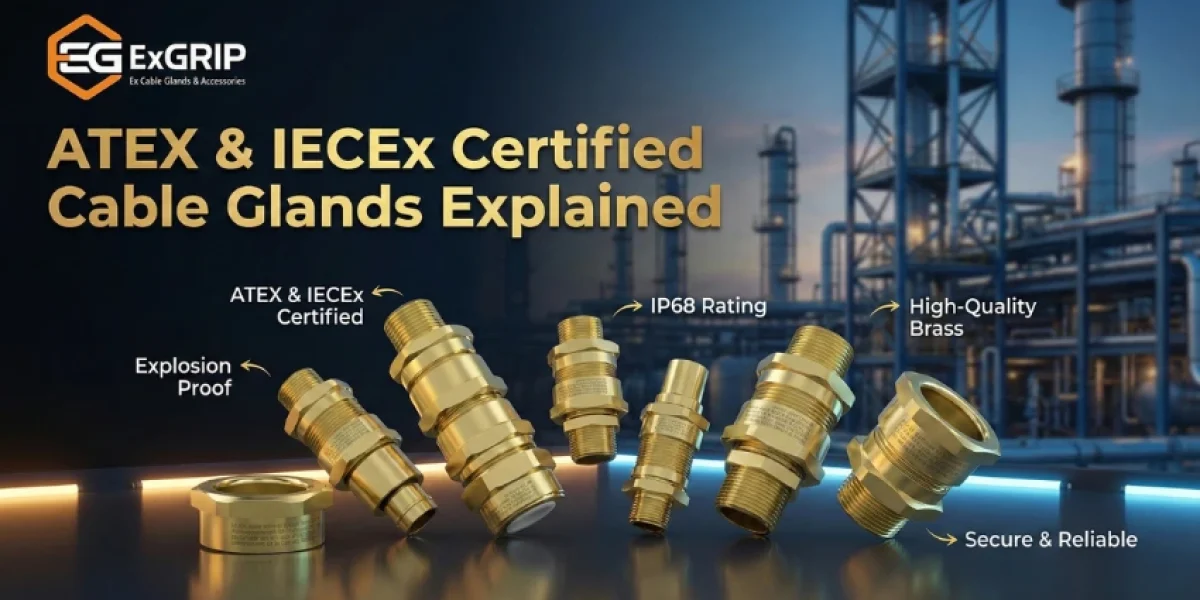
Modern industrial environments demand uncompromised electrical safety especially in hazardous areas where explosive gases, vapours, or dust are present. A critical component ensuring this safety is the cable gland. Whether used in petrochemical plants, offshore platforms, chemical processing, or heavy manufacturing facilities, selecting the correct ATEX & IECEx certified cable glands is essential for explosion protection, regulatory compliance, and long-term system reliability.
This comprehensive guide explains what a cable gland is, the types of cable glands, selection considerations, ATEX & IECEx compliance, and why high-performance manufacturers such as ExGrip are preferred for industrial installations.
What is a Cable Gland?
A cable gland is an electromechanical device designed to securely attach and terminate a cable to equipment such as junction boxes, control panels, motors, and enclosures.
A high-performance industrial gland ensures:
-
Mechanical retention
-
Electrical continuity (for armoured cables)
-
Environmental sealing (IP66 / IP67 / IP68)
-
Protection in explosive atmospheres (Ex zones)
-
Strain relief and cable integrity
For industries where safety is paramount, ATEX cable glands, IECEx cable glands, and explosion-proof cable glands are mandatory.
Types of Cable Glands
Industrial applications require various gland designs to meet mechanical, environmental, and certification demands. Below are the major types:
1. Armoured Cable Glands
Used with SWA / STA / AWA cables, providing armour clamping and grounding.
Common types:
-
Single Compression Armoured Glands
-
Double Compression Armoured Glands
-
Flameproof Armoured Glands (Ex d)
-
Increased Safety Armoured Glands (Ex e)
2. Unarmoured Cable Glands
Ideal for flexible, braided, or unarmoured industrial cables.
3. ATEX & IECEx Certified Cable Glands
Designed for equipment used in Zone 1, Zone 2, Zone 21, and Zone 22 hazardous locations.
4. Explosion-Proof Cable Glands
For environments requiring Ex d flameproof protection.
5. Waterproof / IP68 Cable Glands
Provide ingress protection for outdoor, marine, and washdown installations.
6. Brass Cable Glands & Stainless Steel Cable Glands
Material-specific glands used based on corrosion, vibration, and environmental conditions.
Types of Armoured Cable Glands
Armoured glands vary according to design, environmental seal, and hazardous area compliance:
1. BW Glands (Single Compression – Indoor)
For indoor applications with armoured cables.
2. CW Glands (Outdoor – Weatherproof)
Provide armour clamping + environmental sealing.
3. E1W Glands (Weatherproof & Flameproof Variants)
Suitable for harsh outdoor industrial conditions.
4. A2F Glands (Unarmoured, Flameproof)
Used extensively in Ex d hazardous areas.
5. Ex d / Ex e / Ex nR Glands
Certified for explosive atmospheres.
Why use a Cable Gland Size Chart?
Selecting the right gland is just as important as choosing the right cable. That’s where the cable gland size chart and cable gland selection chart come in. These charts act as quick references to match the outer diameter of a cable with the correct gland size.
-
Ensures a tight and reliable seal
-
Prevents water, dust, or gas entry
-
Avoids loose fittings that may cause cable damage
-
Simplifies installation for engineers and electricians
A cable gland selection chart also highlights which gland type is suitable for armoured, unarmoured, or flexible cables. For example, a brass cable gland is often selected for armoured cables in oil & gas industries, while a waterproof cable gland is chosen for outdoor solar or marine applications.
Cable Gland Size Chart for Armoured Cable :
| Cable Type | Gland Type | Thread Size | Cable Diameter (mm) | Armour Clamping | Certification |
|---|---|---|---|---|---|
| Armoured SWA | CW / E1W | M20–M63 | 8–55 | Yes | ATEX / IECEx / Ex d / Ex e |
| Unarmoured | A2 / A2F | M16–M63 | 4–55 | No | ATEX / IECEx |
| Hazardous Area | Ex d / Ex e / Ex nR | M20–M75 | 6–65 | Yes/No | ATEX / IECEx |
| Industrial General | Brass / SS IP68 | M12–M63 | 3–50 | Optional | IP66/IP68 |
| Machine Cable Entry | EMC / Strain Relief | M16–M50 | 3–32 | Yes | CE / RoHS |
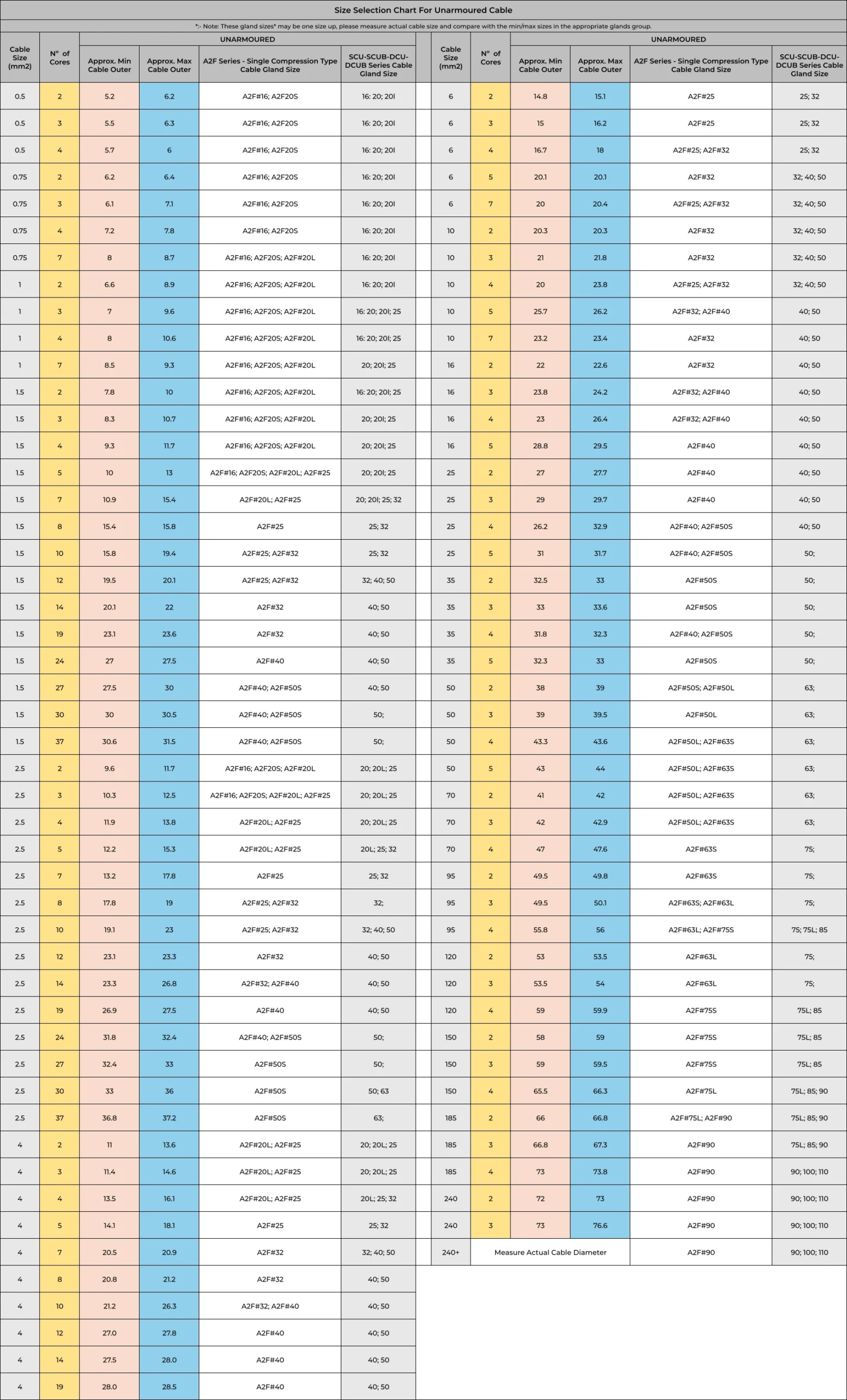
Cable Gland Size Chart for Unarmoured Cable :
Accessories for Cable Glands
Industrial gland installations often require additional accessories for sealing, grounding, and mechanical support:
Locknuts
Earth tags
Serrated washers
Shrouds
Reducers & adaptors
Stopping plugs
Thread conversion fittings
EMC components for shielding continuity
Cable Gland Connector Options
Depending on installation architecture, cable glands are available in:
-
Metric threads (M16–M75)
-
PG threads
-
NPT threads
-
G / BSP threads
-
Hybrid thread forms
These ensure compatibility with global panels, enclosures, and junction boxes.
Installation & Maintenance
Correct installation is essential to ensure flameproof integrity and certification validity.
Installation Steps
-
Verify cable type (armoured / unarmoured).
-
Select correct gland size using cable diameter & thread size.
-
Check ATEX / IECEx markings for zone compatibility.
-
Prepare cable by stripping insulation and armour correctly.
-
Fit inner components and tighten armour clamping.
-
Install gland body onto enclosure using locknut.
-
Apply correct torque settings.
-
Perform sealing tests for IP protection.
Maintenance Checklist
-
Inspect torque condition annually.
-
Check for corrosion (especially brass vs stainless steel environments).
-
Ensure no cable slippage.
-
Verify environmental seals remain intact.
-
Re-torque post vibration-prone operations.
Certifications & Compliance (ATEX & IECEx)
Industrial cable glands for hazardous zones must comply with:
ATEX Directive 2014/34/EU
Mandatory for equipment used in explosive atmospheres across Europe.
IECEx Certification
Global standard for explosion protection used worldwide.
Typical Markings
-
Ex d – Flameproof
-
Ex e – Increased Safety
-
Ex nR – Restricted Breathing
-
IP66 / IP67 / IP68 – Ingress Protection
Supporting Standards
-
EN 60079 series
-
ISO / IEC 60529
-
RoHS
-
CE
Example: Hummel EXIOS ATEX Cable Gland Certificate
Used widely as a benchmark in compliance for industrial electrical fittings.
Global Reach & Why Choose ExGrip?
ExGrip is a trusted specialist in industrial cable glands, offering unmatched expertise and quality for both standard and hazardous installations.
Why Industries Prefer ExGrip
-
High-quality ATEX & IECEx certified cable glands
-
Expertise in armoured, flameproof, and explosion-proof cable glands
-
Wide range: Brass, Stainless Steel, IP68, Ex d, Ex e, Ex nR
-
Compliance with global standards
-
Precision engineering for harsh industrial conditions
-
Competitive pricing and fast delivery within India and worldwide
ExGrip ensures reliability across petrochemical, oil & gas, mining, manufacturing, offshore, power generation, and automation sectors.
Conclusion & Call-to-Action
Selecting the right cable gland, whether it’s a waterproof cable gland, brass cable gland, or using the correct cable gland accessories, is vital for industrial safety and system reliability.
At Exgrip, we provide a full range of cable glands, connectors, and accessories, certified with ATEX, IECEx, IP, RoHS, and REACH, suitable for any industrial or hazardous application.
📩 Talk to our technical team today at Exgrip.com
📞 Or call us directly for quick assistance!
Contact Us:
📞 Phone: +91 9537118899
🌐 Website: www.exgrip.com
📩 Request a Quote: Contact Page
FAQs
What is a cable gland and why is it used?
A cable gland mechanically secures the cable to equipment, provides sealing, strain relief, and ensures electrical continuity (for armoured cables).
What are ATEX cable glands?
ATEX glands are explosion-protected cable glands certified for use in hazardous areas Zone 1 & Zone 2 under the ATEX Directive.
What is the difference between Ex d and Ex e cable glands?
Ex d (flameproof) prevents internal explosions from escaping; Ex e (increased safety) prevents arcs, sparks, or excessive temperatures.
Are armoured and unarmoured cable glands different?
Yes. Armoured glands include armour clamping for SWA/STA cables, while unarmoured glands are simpler and used for flexible or standard cables.
How do I select the right cable gland?
Consider cable type, diameter, hazardous zone, material (brass or stainless steel), ingress protection, certification, and environmental conditions.
If you found this blog helpful, check some of the other blogs below:
- Oil & Gas Industry Cable Glands with –60°C to +200°C Range
- Cable Gland Accessories for Weatherproof Glands
For more insights and updates on web design for small businesses, follow us on Instagram, Facebook, LinkedIn, and Youtube.