
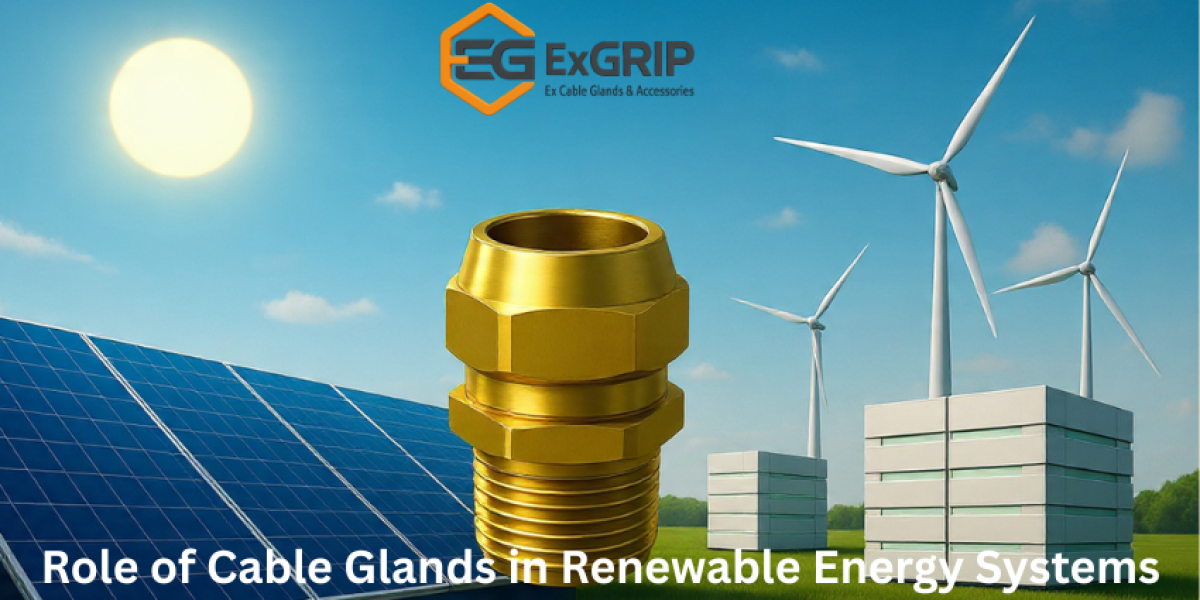
As renewable energy continues to expand globally, the need for reliable, safe, and durable electrical infrastructure is becoming more important than ever. Components like cable glands play a critical role in ensuring the performance and safety of renewable power systems, including solar power plants, wind turbines, battery energy-storage systems (BESS), hydro plants, and hybrid micro-grid installations.
Choosing the right Renewable Cable Glands helps protect cables from environmental damage, mechanical stress, corrosion, vibration, and harsh outdoor conditions ensuring efficient energy delivery and long-term system sustainability.
What Are Cable Glands in Renewable Energy Applications?
A cable gland is a mechanical device designed to secure, seal, and terminate cables entering electrical equipment such as inverters, generators, control panels, junction boxes, and battery banks. In renewable energy environments where exposure to dust, UV radiation, saltwater, high temperatures, and vibration is common, choosing the correct cable gland becomes absolutely essential.
Cable glands used in renewable energy projects are typically made from:
-
Brass Cable Glands
-
Stainless Steel Cable Glands
-
Nylon / Plastic Cable Glands
-
High-temperature and corrosion-resistant specialty cable glands
These glands ensure IP66 / IP67 / IP68 environmental sealing, strain relief, EMC protection, and compliance with global safety standards such as ATEX, IECEx, UL, and CE.
Why Cable Glands Are Important in Renewable Energy Systems?
The performance and lifecycle of renewable energy systems depend heavily on electrical reliability. Cable glands provide:
-
Environmental Sealing
Protects cables from dust, moisture, rain, salt fog, chemicals, UV radiation, and extreme temperature fluctuations critical for outdoor solar and wind installations.
-
Mechanical Cable Protection
Prevents cable pull out, bending damage, strain, and vibration fatigue especially important for rotating wind turbines and battery racks.
-
Explosion & Fire Safety
ATEX & IECEx certified cable glands ensure safe operation in hazardous zones, including hydrogen storage sites and offshore renewable energy systems.
-
Secure Cable Termination
Improves electrical connectivity and reduces risks of power losses or unexpected system shutdown due to cable failure.
Selecting the right gland is just as important as choosing the right cable. That’s where the cable gland size chart and cable gland selection chart come in. These charts act as quick references to match the outer diameter of a cable with the correct gland size.
Cable Glands in Renewable Energy Applications – Usage & Requirements
| Renewable Energy System | Where Cable Glands Are Used | Recommended Features / Requirements |
|---|---|---|
| Solar Energy Systems |
|
|
| Wind Turbine Systems |
|
|
| Battery Energy Storage Systems (BESS) |
|
|
Conclusion & Call-to-Action
Whether you are an installer, EPC contractor, panel builder, or system integrator ExGrip provides engineered solutions for long-lasting renewable power networks.
At ExGrip, we manufacture high-quality industrial and electrical cable glands used across global renewable-energy projects.
📩 Talk to our technical team today at Exgrip.com
📞 Need Cable Glands for Solar, Wind or Battery Storage Systems?
Contact Us:
📞 Phone: +91 9537118899
🌐 Website: www.exgrip.com
📩 Request a Quote: Contact Page
FAQs
Why are cable glands important in renewable energy systems?
Cable glands are essential in renewable energy systems because they secure, seal, and protect power and control cables used in solar plants, wind turbines, and battery storage units. They provide strain relief, environmental sealing, corrosion resistance, and explosion protection, ensuring reliable electrical performance and safety in harsh weather and industrial environments.
Which type of cable glands are commonly used in solar, wind, and battery storage applications?
Renewable energy systems typically use brass, stainless-steel, and nylon/plastic cable glands, along with special high-temperature or corrosion-resistant versions depending on the installation environment.
What IP rating is required for outdoor renewable energy systems?
For harsh outdoor conditions, cable glands with IP66, IP67, or IP68 ratings are recommended to protect against dust, rain, flooding, and moisture intrusion.
How do cable glands improve safety in renewable power plants?
Cable glands ensure safe cable termination, provide strain relief, prevent short circuits or cable pull-out, and reduce fire risk. Certified glands like ATEX and IECEx are crucial for hazardous or explosive zones.
What type of cable glands should be used in offshore wind turbines or marine environments?
Stainless steel cable glands are ideal due to their corrosion resistance against saltwater, humidity, and extreme temperatures. Vibration-resistant designs are preferred due to mechanical movement.
Do cable glands support communication and monitoring cables in renewable systems?
Yes. EMC/EMI shielded cable glands are used for SCADA, automation, and data signaling cables to prevent electromagnetic interference and maintain accurate system monitoring.
How do I select the right size of a cable gland for my installation?
Choose a cable gland based on:
-
Outer diameter (OD) of the cable
-
Thread type (Metric, PG, NPT, BSP)
-
Required IP protection and certification
Incorrect sizing may cause leakage, mechanical failure, or safety hazards.