
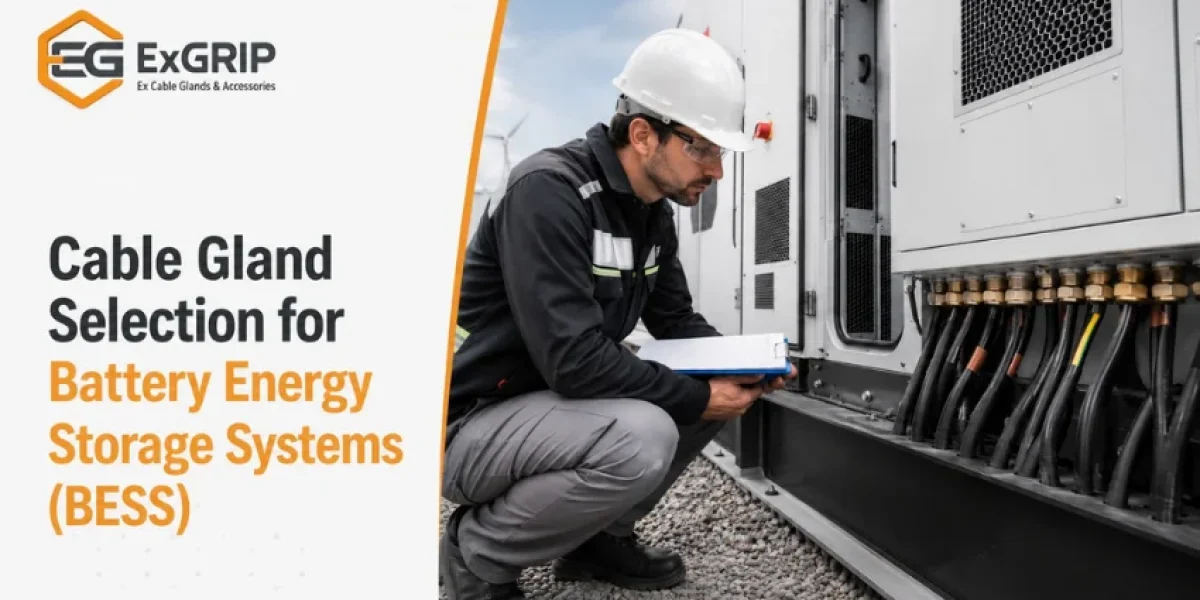
As the global transition toward renewable energy accelerates, Battery Energy Storage Systems (BESS) are becoming a critical part of modern power infrastructure. From utility-scale energy storage projects to commercial battery installations, ensuring safe and reliable cable entry is essential for long-term system performance.
One often overlooked component in a battery energy storage system is the cable gland. While batteries, inverters, and monitoring systems receive significant attention, improper cable gland selection can lead to water ingress, EMC issues, cable damage, equipment failure, and costly downtime.
This guide explains how engineers, project consultants, EPC contractors, and procurement teams can select the right industrial cable gland for modern BESS installations while maintaining safety, reliability, and compliance.
Why Cable Gland Selection Matters in Battery Energy Storage Systems
A Battery Energy Storage System (BESS) contains multiple electrical subsystems that rely on secure cable routing and protection.
These systems often operate in demanding environments where cables are exposed to:
- Dust and dirt
- Rain and humidity
- UV radiation
- Temperature fluctuations
- Mechanical vibration
- Electromagnetic interference
Without a properly selected cable gland, these environmental factors can compromise equipment performance and reduce system lifespan.
A correctly selected cable gland helps provide:
- Reliable cable retention
- Environmental sealing
- Electrical continuity
- Mechanical protection
- Long-term system reliability
Understanding Cable Entry Challenges in BESS Installations
Unlike traditional industrial panels, battery energy storage systems often combine power distribution, communication networks, battery management systems, and monitoring equipment within a single enclosure.
This creates unique cable management challenges.
Common challenges include:
- High cable density
- Multiple cable diameters
- Outdoor exposure
- Electromagnetic interference
- Grounding requirements
- Large power cable routing
As a result, BESS cable management requires more than simply selecting a gland based on cable diameter.
Engineers must consider the complete cable entry system.
The Role of Cable Glands in Battery Energy Storage Systems
A cable gland acts as the secure interface between the cable and the enclosure.
Its primary functions include:
- Sealing cable entry points
- Preventing moisture ingress
- Protecting against dust contamination
- Providing strain relief
- Maintaining enclosure IP ratings
- Supporting grounding and EMC requirements
In modern battery energy storage cable management, cable glands contribute directly to equipment safety and operational reliability.
Key Factors to Consider Before Selecting a Cable Gland
Environmental Protection Requirements
Most BESS installations operate outdoors and require protection against environmental exposure.
For these applications, IP68 cable gland solutions are often preferred because they provide excellent resistance against dust and water ingress.
When evaluating protection requirements, consider:
- Installation location
- Exposure to rain
- Dust levels
- Temperature range
- UV exposure
EMC Protection Requirements
Battery systems contain sensitive electronic equipment that can be affected by electromagnetic interference.
An EMC cable gland provides controlled grounding and shielding continuity to help maintain signal integrity.
EMC cable glands are commonly used in:
- Battery management systems
- Monitoring equipment
- Communication networks
- Power conversion systems
Cable Type
The cable construction significantly influences gland selection.
Common cable types used in BESS projects include:
- Armoured power cables
- Unarmoured power cables
- Instrumentation cables
- Communication cables
- Control cables
Different cable constructions require different gland designs.
Cable Size and Gland Size Compatibility
Selecting the correct gland size remains essential.
Engineers should verify:
- Cable outer diameter
- Armour dimensions
- Sealing range
- Thread size
Using a cable gland size chart or cable gland selection chart can help ensure proper sizing and sealing performance.
Material Selection
The installation environment determines the ideal gland material.
| Material | Typical Application |
|---|---|
| Brass | General industrial installations |
| Nickel-Plated Brass | Corrosion resistance |
| Stainless Steel | Marine and harsh environments |
| Nylon | Light-duty indoor applications |
For most BESS installations, brass and stainless-steel glands are preferred.
Best Cable Gland Types for BESS Applications
IP68 Cable Glands
IP68 cable glands provide maximum protection against dust and prolonged water exposure.
Advantages include:
- High environmental protection
- Long service life
- Reliable outdoor performance
- Suitable for battery containers and outdoor enclosures
EMC Cable Glands
An EMC cable gland helps reduce electromagnetic interference and improves shielding continuity.
Benefits include:
- Enhanced signal integrity
- Reduced electrical noise
- Improved system reliability
- Better protection for sensitive electronics
Armoured Cable Glands
An armoured cable gland is specifically designed for steel wire armoured cables.
Benefits include:
- Secure armour clamping
- Improved mechanical strength
- Reliable earthing continuity
- Protection against cable movement
Many utility-scale battery projects use armoured power cables, making these glands a common selection.
Double Compression Cable Glands
Double compression glands provide sealing on both the inner and outer sheath.
Advantages include:
- Enhanced environmental protection
- Better mechanical retention
- Improved weather resistance
- Suitable for demanding industrial environments
Cable Gland Selection Matrix for BESS Projects
| Application Area | Recommended Gland Type | Key Benefit |
|---|---|---|
| Outdoor Battery Container | IP68 Cable Gland | Water and dust protection |
| Communication Systems | EMC Cable Gland | Signal integrity |
| Power Distribution Cables | Armoured Cable Gland | Mechanical protection |
| Utility Scale Installations | Double Compression Gland | Enhanced sealing |
| Harsh Industrial Environment | Stainless Steel Gland | Corrosion resistance |
Common Cable Gland Selection Mistakes in BESS Projects
Even experienced engineers can make mistakes during specification. Common issues include:
Incorrect Cable Diameter Measurement Using nominal cable size rather than actual outer diameter. Ignoring EMC Requirements Selecting standard glands where shielding continuity is required. Choosing Indoor-Rated Glands Installing non-IP-rated products in outdoor battery systems. Incorrect Material Selection Using materials that are unsuitable for environmental conditions. Missing Accessories Overlooking essential accessories required for proper installation.
How Cable Glands, Fittings and Accessories Work Together
A successful cable entry system involves more than just a gland.
The complete system typically includes:
- Cable glands
- Adaptors
- Reducers
- Locknuts
- Earth tags
- Shrouds
- Sealing washers
Together, these components help ensure:
- Reliable sealing
- Mechanical retention
- Earthing continuity
- Environmental protection
This integrated approach is essential for effective battery energy storage cable management.
Recommended Cable Gland Accessories for BESS Installations
Several accessories improve installation reliability.
Earth Tags
Maintain grounding continuity.
PVC Shrouds
Protect gland components from environmental exposure.
Sealing Washers
Enhance ingress protection.
Locknuts
Secure glands to enclosures.
Adaptors and Reducers
Provide thread compatibility across different equipment types.
These cable gland accessories play an important role in achieving long-term performance.
Future Trends in Battery Energy Storage Cable Management
The rapid expansion of energy storage projects is driving innovation in cable management solutions.
Emerging trends include:
- Higher-density cable routing
- Smart monitoring systems
- Improved EMC protection
- Advanced sealing technologies
- Increased use of stainless-steel components
As BESS installations continue to grow, demand for reliable industrial cable gland solutions is expected to increase significantly.
Why Choose ExGrip for BESS Cable Gland Solutions?
As a trusted cable gland manufacturer, ExGrip offers solutions designed for demanding industrial applications.
Our product range includes:
- IP68 Cable Glands
- EMC Cable Glands
- Armoured Cable Glands
- Double Compression Cable Glands
- Cable Gland Accessories
- Adaptors and Reducers
Designed for reliability, durability, and industrial performance, ExGrip products support safe and efficient cable entry across modern energy storage installations.
Conclusion & Call-to-Action
The success of any Battery Energy Storage System depends on the reliability of every component, including the cable entry system.
Selecting the correct IP68 cable gland, EMC cable gland, or armoured cable gland helps protect equipment, improve system reliability, and support long-term operational performance.
At Exgrip, we provide a full range of cable glands, connectors, and accessories, certified with ATEX, IECEx, IP, RoHS, and REACH, suitable for any Battery Energy Storage System application.
📩 Talk to our technical team today at Exgrip.com
📞 Or call us directly for quick assistance!
Contact Us:
📞 Phone: +91 9537118899
🌐 Website: www.exgrip.com
📩 Request a Quote: Contact Page
FAQs
What does an EMC cable gland do?
An EMC cable gland helps maintain shielding continuity and reduces electromagnetic interference in sensitive electrical and communication systems.
What is the best cable gland for Battery Energy Storage Systems?
The best cable gland depends on the installation environment. For outdoor BESS projects, IP68-rated cable glands are commonly preferred due to their superior sealing performance.
Why are IP68 cable glands used in BESS installations?
IP68 cable glands provide protection against dust and water ingress, helping maintain enclosure integrity in outdoor energy storage systems.
When should an armoured cable gland be used?
Armoured cable glands should be used whenever steel wire armoured cables require secure clamping and earthing continuity.
How do I select the correct cable gland size?
Measure the cable’s actual outer diameter and compare it with the manufacturer’s sealing range using a cable gland size chart.
Are cable gland accessories necessary?
Yes. Accessories such as locknuts, earth tags, shrouds, and sealing washers improve installation safety and long-term performance.
What materials are commonly used for industrial cable glands?
Brass, nickel-plated brass, stainless steel, and nylon are commonly used depending on the application environment.