
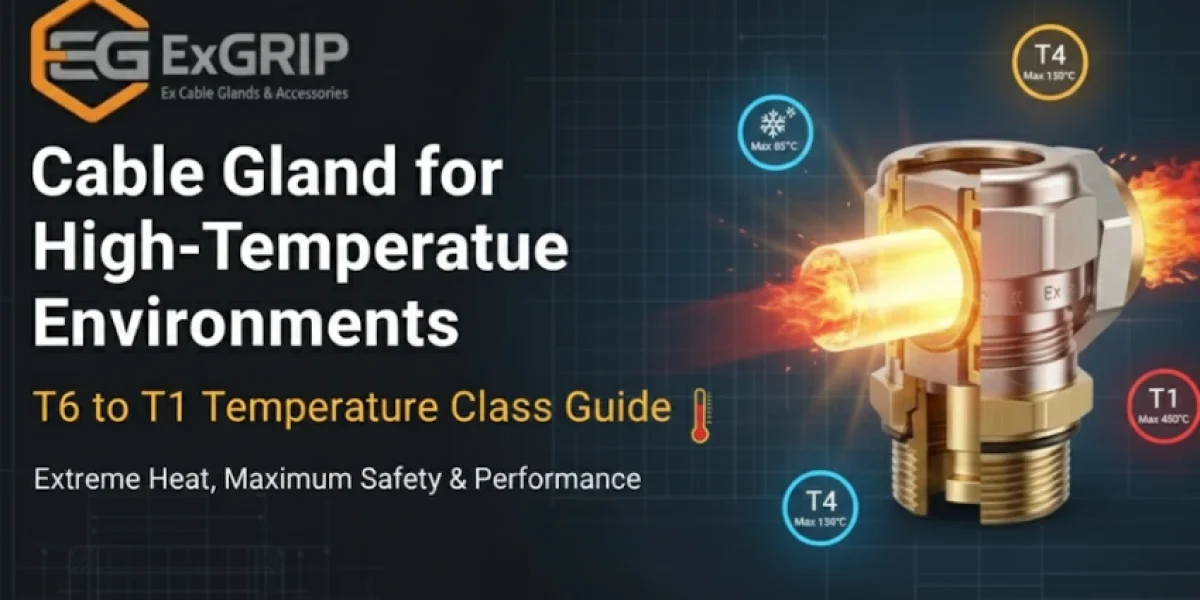
Industrial environments such as oil & gas plants, refineries, power stations, and chemical processing facilities often operate at extreme temperatures. Selecting the correct cable gland for high-temperature environments is critical for safety, compliance, and long-term reliability.
In hazardous areas, the temperature class (T6 to T1) determines the maximum surface temperature equipment can reach. Choosing the wrong gland may result in overheating, ignition risk, or certification failure.
This guide explains:
-
What temperature classes mean
-
Cable gland parts name and construction
-
Types suitable for high heat
-
How to select correct cable gland sizes
-
Reference cable gland size chart in mm
-
Important cable gland accessories
-
Downloadable cable gland size chart pdf references
What is Temperature Class (T6 to T1)?
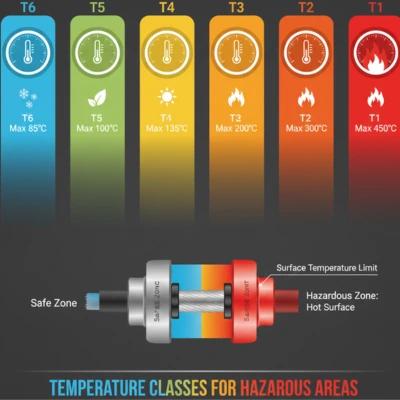
Temperature class defines the maximum surface temperature allowed for equipment in hazardous areas.
For example:
-
T6 environments require equipment with surface temperature below 85°C.
-
T3 or T2 environments tolerate higher operating temperatures.
Selecting the correct cable gland size and material ensures the gland does not exceed these limits.
Cable Gland Parts Name and Construction
Understanding the cable gland parts name helps engineers evaluate heat resistance.
Typical high-temperature gland components:
Entry thread
Lock nut
Sealing ring
Compression nut
Inner seal
Outer seal
Armour clamp (for armoured cables)
Earth tag
Shroud
In high-temperature environments:
Seals are made of silicone, fluorosilicone, or Viton.
Body material is brass, nickel-plated brass, or stainless steel.
Threads must maintain mechanical integrity under thermal expansion.
Types of Cable Glands for High-Temperature Applications
Double Compression Glands
Used for armoured cables in hazardous areas.
Engineers often refer to double compression cable gland size chart pdf for accurate selection.
Advantages:
Dual sealing
Better vibration resistance
Suitable for T4–T1 areas (depending on material)
Barrier Glands
Recommended in gas group IIC areas.
Prevent gas migration
High sealing performance
Used in oil & gas facilities
Stainless Steel Cable Glands
Ideal for:
Marine
Chemical plants
High corrosion + high temperature zones
How to Select Cable Gland for High Temperature (Step-by-Step)
Proper selection requires matching cable size and gland size chart data with environmental temperature.
Identify Hazardous Area Zone
Check temperature class (T6–T1).
Check Cable Outer Diameter
Refer to a cable gland size chart or gland size chart to match clamping range.
Verify Material Compatibility
-
Brass for general industrial
-
Stainless steel for extreme heat & corrosion
Confirm Seal Material Rating
Seal must withstand operating temperature without deformation.
Match Thread Type
Metric, NPT, or BSP — verify with cable gland chart reference.
Cable Gland Size Chart in mm (Reference Table)
Below is a simplified cable gland size chart in mm for selection reference.
| Gland Size | Cable Diameter Range (mm) |
|---|---|
| M20 | 6 – 12 mm |
| M25 | 10 – 16 mm |
| M32 | 15 – 22 mm |
| M40 | 20 – 28 mm |
| M50 | 26 – 35 mm |
| M63 | 32 – 44 mm |
Engineers should always verify with:
For precise industrial projects, refer to manufacturer-issued cable gland size and gland size chart documentation.
Cable Size and Gland Size Matching
Correct cable size and gland size matching prevents:
Seal failure
Overheating
Mechanical stress
Loss of IP rating
Using a verified cable size and gland size chart ensures compliance with hazardous area certification.
Improper selection may cause:
Thermal expansion leakage
Seal cracking
Reduced lifespan
Important Cable Gland Accessories for High-Temperature Areas
High-temperature installations require compatible cable gland accessories:
Lock nuts (high-temp rated)
Earth tags
Serrated washers
IP washers
Reducers and adapters
Stopping plugs
Heat-resistant shrouds
Accessories must match the same temperature class rating as the gland body.
Common Mistakes in High-Temperature cable Gland Selection
-
Using standard rubber seals in T4+ zones
-
Ignoring thermal expansion
-
Selecting incorrect cable gland sizes
-
Not verifying gland chart references
-
Over-tightening beyond torque specification
Conclusion & Call-to-Action
Selecting the correct cable gland for high-temperature environments requires:
-
Understanding T6 to T1 temperature classes
-
Reviewing correct cable gland parts name and materials
-
Matching cable diameter with verified cable gland size chart
-
Using certified cable gland accessories
-
Referring to updated cable gland size chart pdf documentation
For engineering projects, always consult the latest gland chart and certified manufacturer technical data before installation.
📩 Talk to our technical team today atExgrip.com
📞 Or call us directly for quick assistance!
Contact Us:
📞 Phone: +91 9537118899
🌐 Website: www.exgrip.com
📩 Request a Quote: Contact Page
FAQs
Are armoured cable glands suitable for high heat?
Yes, when selected from an approved armoured cable gland size chart and rated for temperature class.
Do double compression glands perform better in high temperatures?
Yes, especially when selected using double compression cable gland size chart pdf and rated for hazardous areas.
Can standard cable glands be used in high-temperature areas?
No. Only glands certified for the required temperature class should be installed.
How do I check correct cable gland size?
Use a verified cable gland size chart in mm and match with the cable outer diameter.
Where can I find electrical cable gland size chart pdf?
Manufacturers provide official electrical cable gland size chart pdf documents for engineering reference.
What happens if gland size is incorrect?
Improper cable size and gland size matching may cause sealing failure and safety risk.