
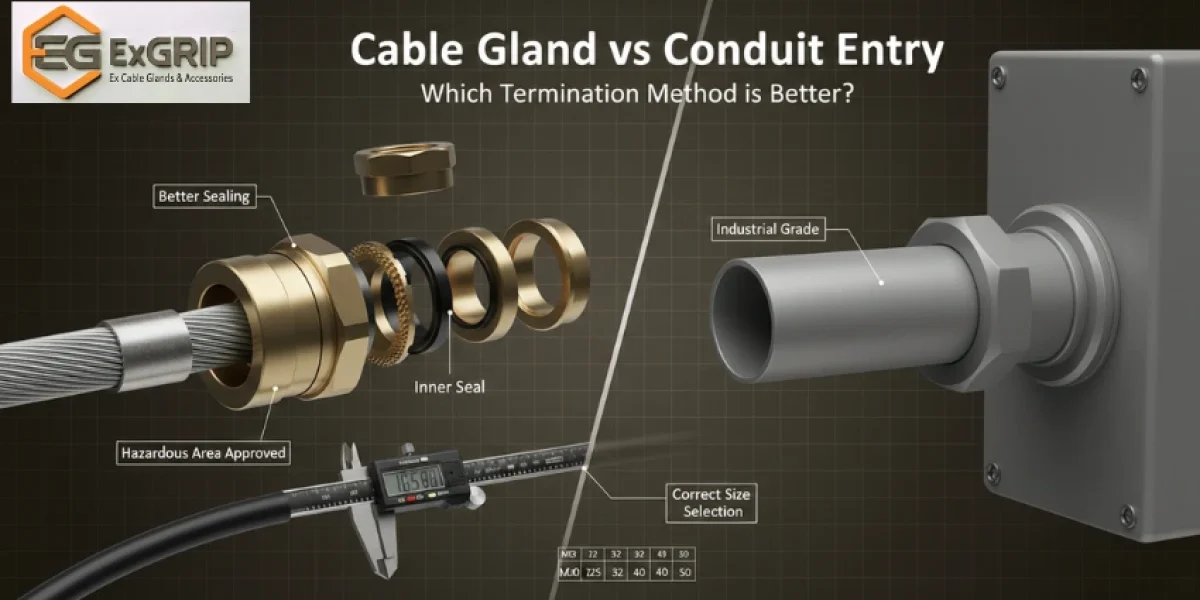
In industrial electrical systems, choosing the right termination method directly impacts safety, sealing performance, and long-term reliability. The debate between cable gland and conduit entry is common in panel building, hazardous areas, and heavy-duty installations.
Engineers frequently search for:
-
cable gland size chart
-
cable gland types
-
cable gland size
-
cable glanding and termination
-
armoured cable gland size chart pdf
-
double compression cable gland size chart pdf
This comprehensive guide explains the difference, applications, selection logic, and when to use each termination method.
What is a Cable Gland?
A cable gland is a mechanical device used to securely attach and seal the end of an electrical cable to equipment. It provides:
-
Mechanical retention
-
Environmental sealing (IP protection)
-
Earthing continuity
-
Strain relief
In industrial settings, especially with armoured cable gland installations, glands are mandatory for safety compliance.
Common materials:
-
Brass cable gland
-
Nickel-plated brass
-
Stainless steel
What is Conduit Entry?
Conduit entry refers to routing cables through a rigid conduit pipe system that enters the enclosure. It provides:
-
Mechanical protection via pipe
-
Organized cable routing
-
Basic environmental shielding
However, it does not individually seal each cable like a double compression cable gland does.
Types of Cable Gland Used in Industrial Installations
Single Compression Cable Gland
-
Used for unarmoured cables
-
Basic environmental sealing
-
Common in indoor panels
Double Compression Cable Gland
-
Used for armoured cables (SWA)
-
Dual sealing: inner & outer sheath
-
Required in hazardous zones
-
Refer to double compression cable gland size chart
Armoured Cable Gland
-
Designed for SWA cables
-
Provides armour clamping
-
Use armoured cable gland size chart pdf for correct selection
Cable Gland Size Chart & Selection Chart
Correct cable gland size depends on:
-
Cable outer diameter (OD)
-
Core type
-
Armour type
-
Installation area
Below is a simplified cable gland size chart in mm:
| Cable OD (mm) | Gland Size | Application | Example Use |
|---|---|---|---|
| 12–16 mm | M20 | Light duty panels | Control cables |
| 16–21 mm | M25 | Industrial panels | Motor feeders |
| 21–26 mm | M32 | Armoured cable gland | SWA cable |
| 26–32 mm | M40 | Heavy power cables | 150 sq mm cable gland size |
| 32–38 mm | M50 | Large feeders | 3.5 core 300 sq mm cable gland size |
For detailed engineering reference, consult:
-
electrical cable gland size chart pdf
-
cable gland chart
-
double compression cable gland size chart pdf
-
armoured cable gland size chart
When selecting, always match cable and gland size precisely to avoid ingress failure.
Cable Gland vs Conduit Entry – Technical Comparison
| Parameter | Cable Gland | Conduit Entry |
|---|---|---|
| Sealing Protection | High (IP66/IP68 possible) | Moderate |
| Hazardous Area Suitability | Excellent | Limited |
| Armoured Cable Support | Yes | No direct armour clamping |
| Installation Complexity | Moderate | Higher (pipe routing) |
| Maintenance | Easy gland replacement | Requires conduit disassembly |
| Compliance | Meets industrial standards | Depends on design |
For hazardous locations, double compression cable gland is strongly recommended.
Accessories Required
Cable glands are available in:
-
Metric threads (M20, M25, M32 etc.)
-
PG threads
-
NPT threads
Always verify cable gland type and size before installation.
Connector & Threading Standards
Proper installation and maintenance are key to getting the best performance from your cable glands. Whether it’s a waterproof cable gland, brass cable gland, or standard connector, following best practices ensures longevity and safety.
Installation Tips:
-
Follow the recommended torque values to avoid leaks or damage
-
Use appropriate cable gland accessories, such as O-rings or adapters, to maintain IP or watertight integrity
-
Protect the cable’s bend radius; use 90° adapters for sharp corners
-
Ensure grounding for metallic glands and connectors
Maintenance Tips:
-
Inspect seals and washers regularly for wear or damage
-
Retighten glands after thermal cycles or heavy use
-
Keep certification datasheets (ATEX, IECEx, IP) handy for audits
-
Replace worn-out glands promptly to avoid electrical hazards
Regular maintenance prolongs the life of your cable gland solutions and ensures safe, compliant operation.
Installation & Maintenance Guidelines
Proper Installation Steps:
-
Check cable OD.
-
Refer to cable gland size chart pdf.
-
Strip outer sheath carefully.
-
Clamp armour (if armoured cable gland).
-
Tighten compression nut.
-
Test sealing.
Avoid incorrect armoured cable gland size selection — this is the most common failure reason.
Certifications & Compliance
Industrial cable glands comply with:
-
IP protection standards
-
Hazardous area requirements
-
RoHS
-
CE standards
For commercial documentation, include cable gland hsn code in procurement paperwork.
When to Choose Cable Gland Over Conduit Entry?
Choose cable gland if:
-
Installation is in hazardous areas
-
You need strong sealing
-
Using armoured cables
-
Outdoor industrial exposure
Choose conduit entry if:
-
Large grouped cable routing
-
Mechanical routing priority over sealing
-
Structured industrial piping layout
Global Industrial Preference
Globally, industries prefer brass cable gland and double compression cable gland for heavy-duty reliability.
Engineers typically consult:
-
cable gland types pdf
-
electrical cable gland size chart pdf
-
double compression cable gland size chart
Before final selection.
Conclusion & Call-to-Action
Selecting the right cable gland, whether it’s a waterproof cable gland, brass cable gland, or using the correct cable gland accessories, is vital for industrial safety and system reliability.
At Exgrip, we provide a full range of cable glands, connectors, and accessories, certified with ATEX, IECEx, IP, RoHS, and REACH, suitable for any industrial or hazardous application.
📩 Talk to our technical team today at Exgrip.com
📞 Or call us directly for quick assistance!
Contact Us:
📞 Phone: +91 9537118899
🌐 Website: www.exgrip.com
📩 Request a Quote: Contact Page
FAQs
What is the difference between cable gland and conduit entry?
Cable glands seal individual cables; conduit entry routes multiple cables via pipe without individual sealing.
Where is double compression cable gland used?
Used in hazardous areas and with armoured cables.
How to select 150 sq mm cable gland size?
Refer to the official cable gland size chart and match cable OD.
What is 3.5 core 300 sq mm cable gland size?
Typically requires larger gland size like M50 depending on OD.
What is cable gland HSN code?
HSN code varies by region and must be checked for tax classification.